Quick Read
- NCDA Administrative Order No. 001, s. 2026 puts the unified PWD ID on a central registry, with a unique number and QR code replacing local card designs.
- Officials say all persons with disabilities must register again, but the order has no re-registration deadline, merchant duty or penalty.
- Holders with non-apparent disabilities carry the documents and five-year revalidation, and small LGUs carry the rollout equipment gap.
- Merchants still face BIR deduction disallowance on illegitimate IDs, and no rule yet requires them to use the new verification tool.
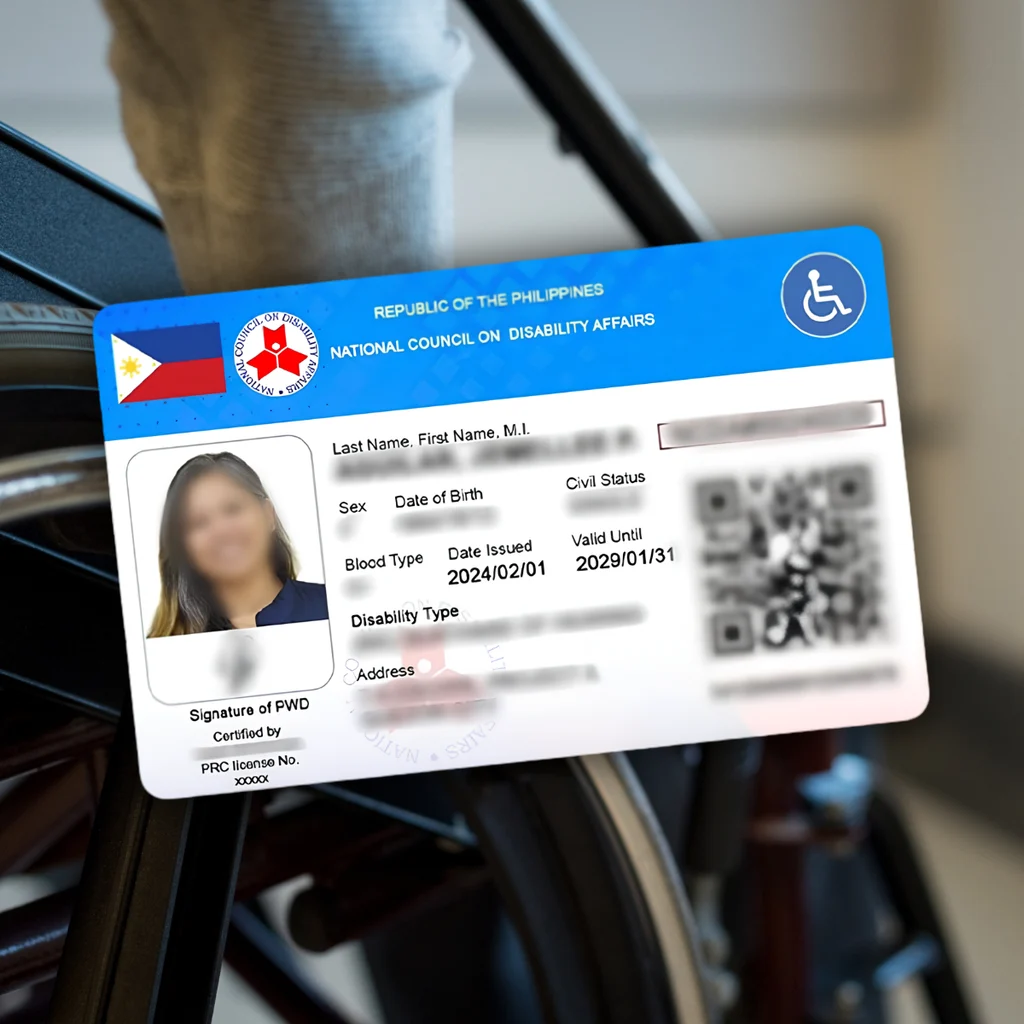
The unified PWD ID moves proof of eligibility from the card in a customer’s hand to a record in a national database. NCDA’s executive director said on Nov 4 that all persons with disabilities must register again, even those with valid IDs. The order behind the system does not contain that requirement, and its costs fall unevenly on cardholders, small LGUs and merchants.
The Unified PWD ID Replaces Card Checks With Registry Lookups
NCDA Administrative Order No. 001, s. 2026 is dated June 2, 2026, and carries a July 8 registration stamp from the Office of the National Administrative Register. NCDA posted the text in September. Each ID is a digital record with a unique alphanumeric number, a photo and a QR code or barcode, held in a central registry that NCDA and DSWD run with technical support from the Department of Information and Communications Technology.
LGUs still approve and issue the IDs. What changes is where the check happens. A card missing from the registry stops verifying, whatever it looks like. DSWD’s secretary told senators on Oct 21 that local issuance has produced about 1,500 different ID designs, which makes consistent checking hard for establishments.

IDs for permanent disabilities are valid for life under the order. IDs for non-apparent disabilities are revalidated every five years, or on a schedule set in later guidelines.
Legitimate Holders Carry the Documentation Cost
Applicants with non-apparent disabilities must submit medical documents, NCDA’s executive director said on Nov 4, while applicants with apparent disabilities need no disability certificate. These are people who already hold valid cards. They now produce paperwork again, and then again every five years.
Holders with permanent disabilities gain the most from the unified PWD ID, since the order gives them an ID valid for life after this registration. Legitimate cardholders also gain a card that can be checked against a registry. People using fake cards lose access only where a merchant actually scans, and no rule yet requires that.

NCDA figures reported this week show more than 190,000 registrants and more than 128,000 cards issued. The same reports put the remaining 2.7 million registrations at a 2027 target.
Small LGUs Carry the Rollout Cost
LGU disability offices do the verification, encoding and printing. DSWD’s secretary said the department gives smaller LGUs software but no hardware, and that the NCDA budget cut is money that would have bought hardware for those offices. The order has NCDA, with the Department of the Interior and Local Government, lead phased LGU training and says funding allocations shall be specified, but it names no amount.
The same offices face enforcement. DSWD’s secretary said irregular issuance is an administrative violation by LGUs and that DSWD is working with the DILG to act on it. The offices with the least equipment therefore carry the most scrutiny.
Merchants Hold the Tax Risk Without a Verification Mandate
BIR Revenue Regulations No. 5-2017 require establishments that grant the PWD discount to record the customer’s name, ID number, disability and the discount and VAT exemption given. In December 2024, BIR said it would audit those records and disallow the deductions claimed on illegitimate ID numbers. It cited an estimated ₱88.2 billion in 2023 revenue losses from fake cards.

The Department of Justice, as reported in February 2025, has said the wording of the law makes presenting the ID enough. A restaurant or drugstore with heavy PWD volume may have to honor a card that DSWD itself describes as difficult for establishments to verify, and answer for it in an audit.
The unified PWD ID gives merchants a way to check. It does not oblige them to use it. DSWD’s secretary said the department is working with BIR on revenue regulation amendments that would encourage merchants to adopt the system for verification. The department’s own description says encourage, not require. Until BIR writes the rule, scanning stays optional and the audit risk stays where it was.
The Published Order Leaves Dates and Duties to Later Rules
The registration push, the 2027 and 2030 dates and the transition rules for merchants come from officials and reports, not from the signed text.
| Claim | Where it comes from | In the signed order |
|---|---|---|
| All PWDs must register again | NCDA executive director, Nov 4 | No |
| Registration by 2027, old cards retired by 2030 | NCDA targets, as reported | No |
| Merchants must honor old and new IDs for three years | Published reports citing the order | No |
| Lifetime validity | The order | Yes, conditional |
Article VIII of the order is one sentence providing for a three-year transition period. It does not say what transitions. Lifetime validity is conditional too, because another provision makes ID validity subject to an NCDA decision while legislation on lifetime validity is pending. DSWD’s secretary described the ID as digital with no physical card, while the order lets LGUs print physical IDs on request.

DSWD’s secretary also said the department is amending the RA 10754 rules with DOH and DOF so DSWD can issue IDs, and that the unified system could be used already after that. The order names LGUs as the issuers, and the amendment was still pending when he spoke.
For the unified PWD ID, the order moved the proof to a database and left the obligations to later rules. Cardholders carry the paperwork, small LGUs carry the equipment gap, and merchants carry the audit risk. A BIR revenue regulation, if it comes, is the rule that would turn optional scanning into a condition of claiming the deduction, and that is where the cost would shift next.
Track more regulatory shifts that affect your business in Policy & Regulation section of Hemos PH.