Quick Read
- The NPC has received breach notifications from ten agencies but has disclosed no count of affected people, no data types, and no link between the cases.
- In this government data breach cycle, the SEC and BIR each paired an assurance that internal databases remain intact with a checklist for the public.
- The SEC’s email to each account holder names malware or unauthorized access on the holder’s own device as a possible route, while the same notice says the origin is still being verified.
- A TIN, birth date, and home address do not reset like a password, so registrants carry the risk of misuse whatever the investigations find.
- The NPC has said that notifying it is only one part of an agency’s obligations under the Data Privacy Act.
The National Privacy Commission (NPC) said on November 10 that ten government agencies have filed personal data breach notifications, among them the SEC, the BIR, and the DICT. It has not said how many people are affected, what data is involved, or whether the cases are connected. Two of those agencies have told the public what to do, which is to change passwords, turn on authentication, and watch accounts. Neither public statement says how it happened, but the SEC’s email to individual account holders names a possible route.
Ten Agencies Have Filed Government Data Breach Notices
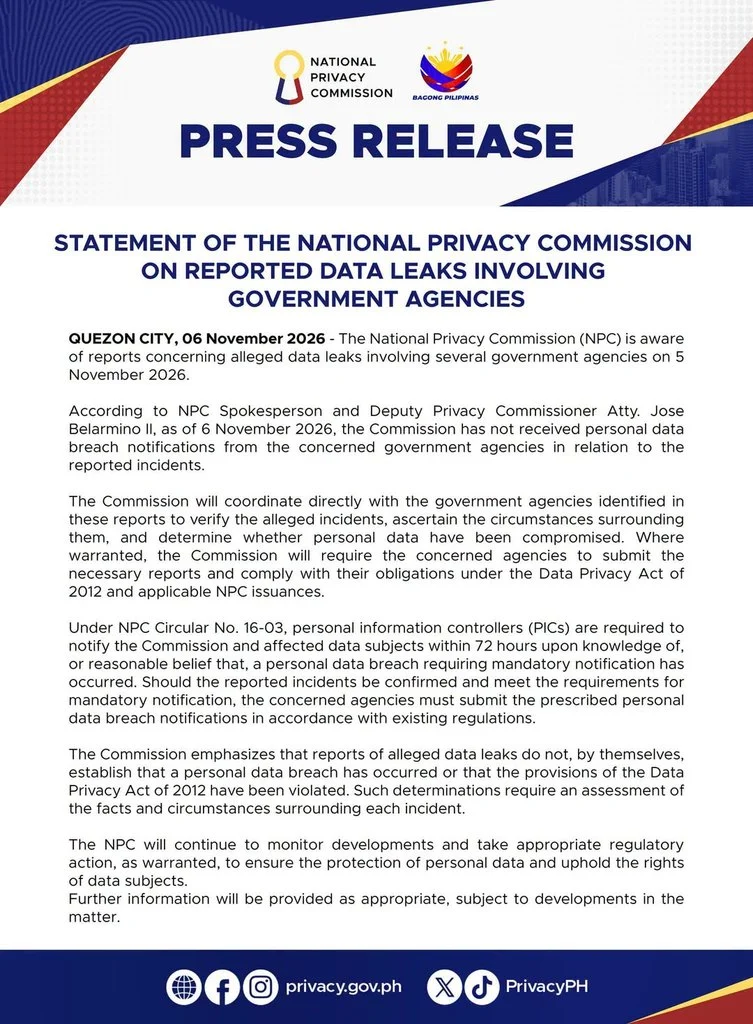
The notices came from the SEC, BIR, and DICT, plus seven others including PAGCOR, the Philippine Coast Guard, and the Department of Justice. The NPC is assessing each one. Four days earlier, on November 6, it said it had received no notifications and that reports of alleged leaks do not, on their own, establish a breach. The SEC says it detected its own incident that same day and notified the NPC on November 9.
Circular 16-03 gives a controller 72 hours to notify the NPC and affected individuals once it knows, or reasonably believes, that a breach requiring mandatory notification has occurred. The SEC has not said when it reached that point, so the dates alone settle nothing.
| Date | Who | What was said |
|---|---|---|
| Nov 6 | NPC | No notifications yet. Alleged leaks alone do not establish a breach. |
| Nov 6 | SEC | Detects its incident (per its Nov 9 statement). |
| Nov 9 | SEC | Notifies NPC. Profile data may be affected. |
| Nov 9 | BIR | Claims are being addressed with CICC and DICT-NCERT. |
| Nov 10 | NPC | Ten agencies have filed notifications. |
| Nov 10 | BIR | Some taxpayer information may have been accessed. |
The SEC and BIR Answered With Checklists
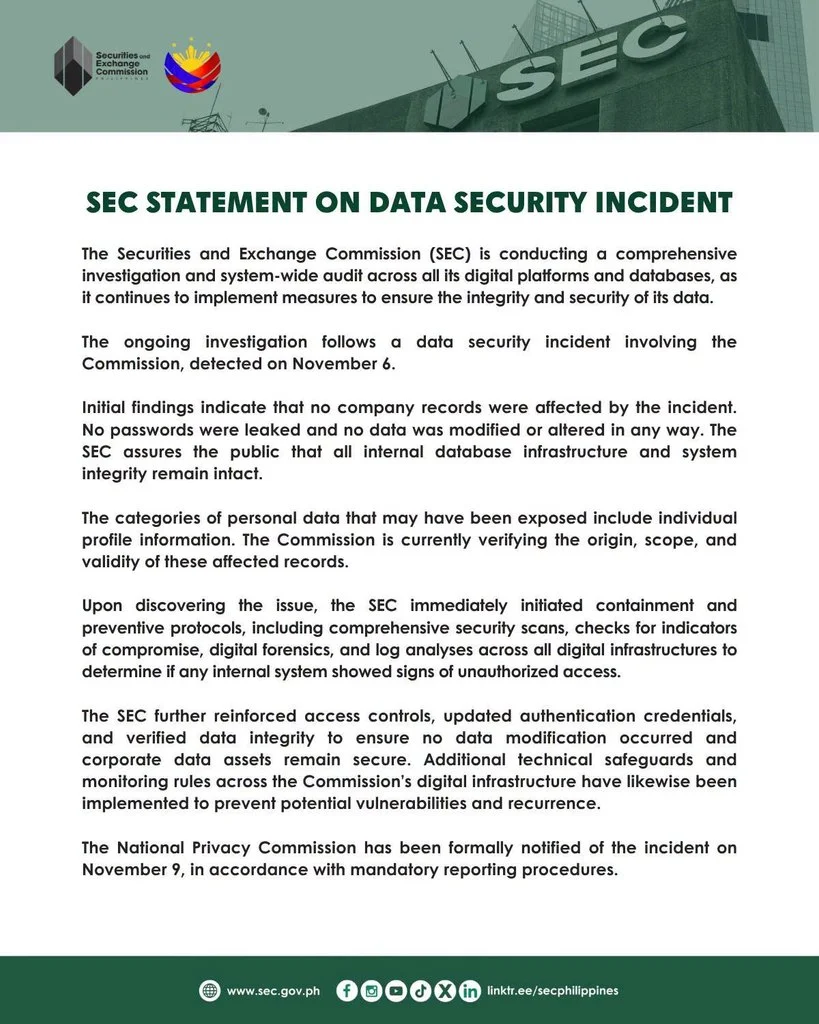
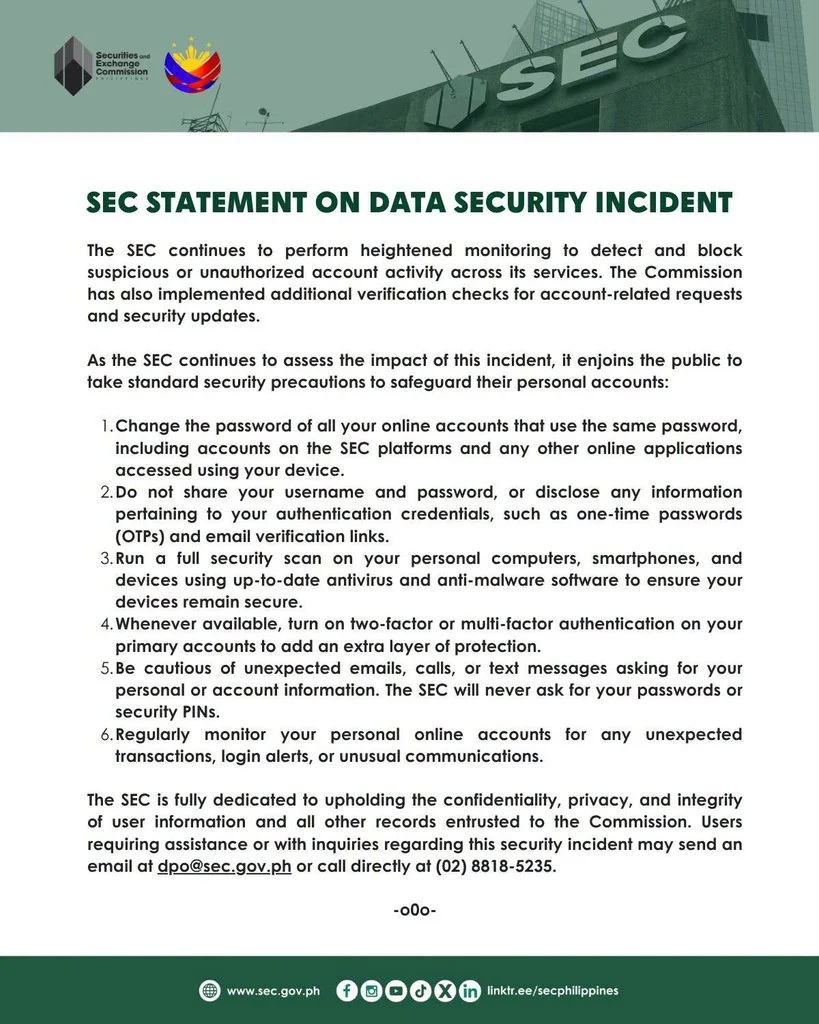
The SEC’s public advice lists six steps: change reused passwords, keep credentials and one-time passwords private, scan devices, turn on multi-factor authentication, distrust unexpected messages, and monitor accounts. The SEC calls them “standard security precautions,” and they are. The same statement says the SEC is still verifying the origin, scope, and validity of the affected records.
The notice sent to account holders goes further. Its opening paragraph says an account may have been leaked potentially through malware infection or unauthorized access by a third party on the holder’s own laptop, desktop, phone, or other device. It says the data that may be affected is “strictly limited to” eight fields. They are full name, username, email address, mobile number, date of birth, gender, address, and TIN. The public statement uses a general phrase, individual profile information, and does not say devices were the route.
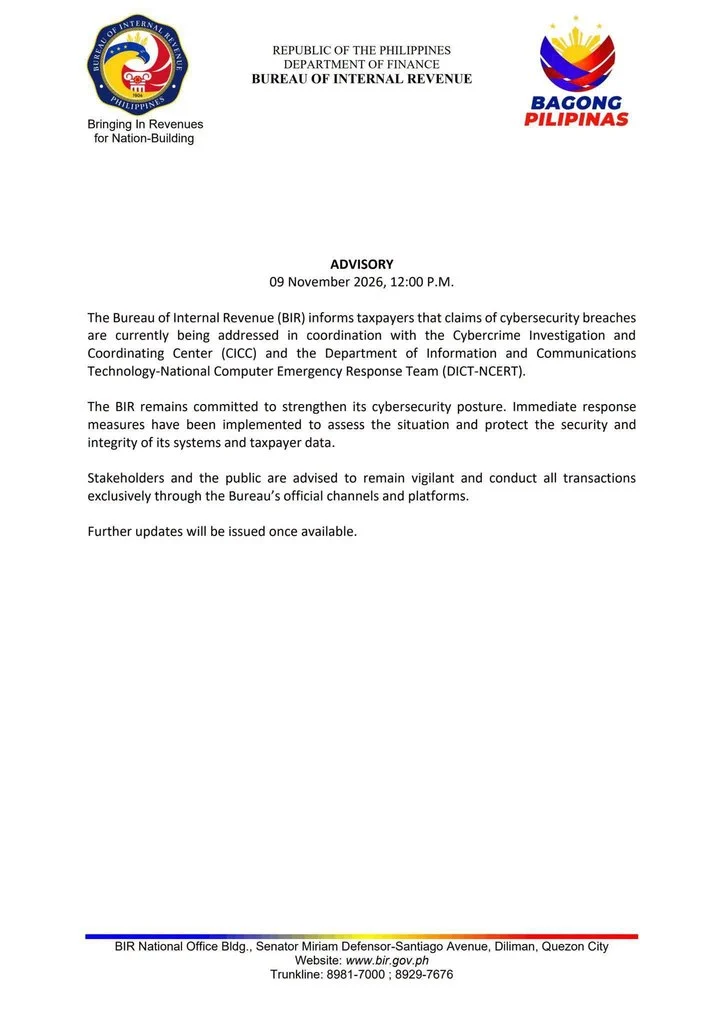
The BIR’s November 10 advisory follows the same shape, saying initial findings show filing and payment records were not compromised even though some taxpayer information may have been accessed without authorization. It also says the integrity of its internal database infrastructure and system remains intact. The SEC’s statement gives that assurance in nearly the same words, saying “all internal database infrastructure and system integrity remain intact.” The BIR then tells taxpayers to update passwords, use multi-factor authentication where available, monitor their accounts, and transact only through official channels.

If forensics confirm that credentials were taken from users’ devices, the advice fits. If they point elsewhere, registrants will have spent the effort on the wrong fix. Either way, the work was assigned before the cause was known.
The SEC Notice to Account Holders Names Their Own Devices
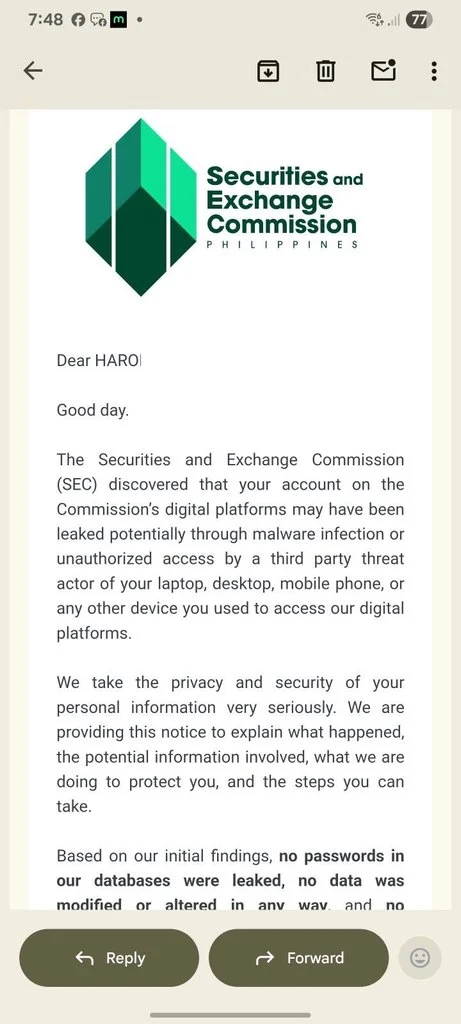
The email that reached individuals is more specific than either public statement. The SEC’s “Cybersecurity and Data Privacy Notice” is emailed to each account holder by name, and the copies recipients have shared match in the portions visible. Because a notifiable breach requires telling affected individuals within 72 hours, in any government data breach this email is the first thing most registrants read from the agency.
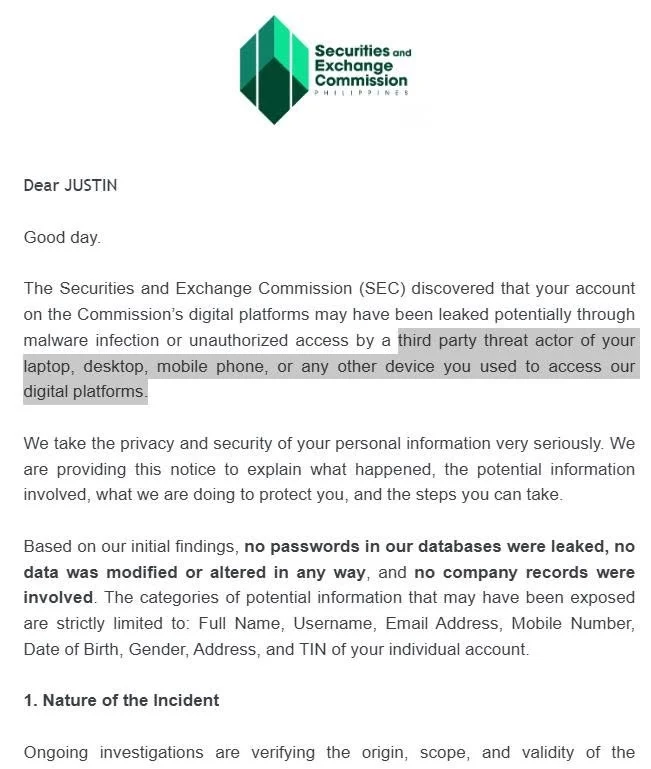
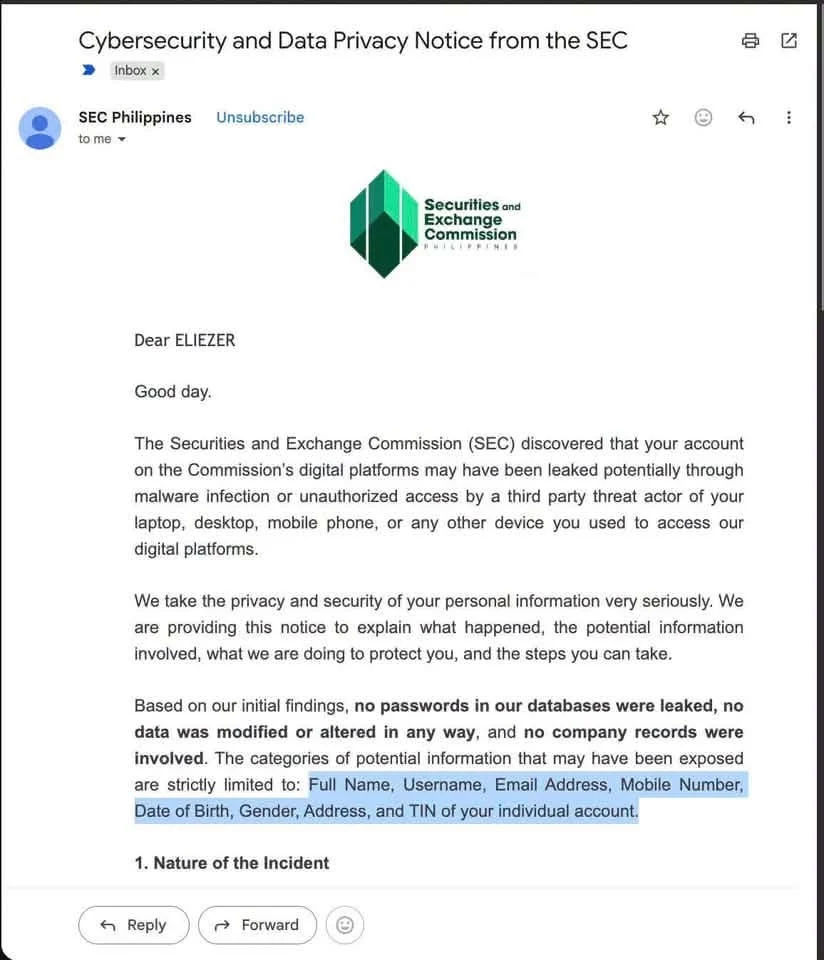
Its opening sentence says the holder’s account may have been leaked potentially through malware infection or unauthorized access by a third party threat actor of the holder’s laptop, desktop, mobile phone, or any other device used to access the platforms. The sentence hedges twice, and still names a category of cause, which is the holder’s own equipment.

The notice then says initial findings show no passwords “in our databases” were leaked, no data was modified, and no company records were involved. The public statement says only that no passwords were leaked. It lists eight fields that may be affected, all tied to the individual account, namely full name, username, email address, mobile number, date of birth, gender, address, and TIN. Its first numbered section, “Nature of the Incident,” opens by saying ongoing investigations are verifying the origin, scope, and validity.
So one document tells the recipient where the leak may have come from and that the investigation has not yet established where it came from. A holder who runs a full scan and finds nothing has not learned that the SEC’s systems were clean. A holder who finds malware has not learned that it caused this. Some recipients and commentators have said in public posts that they read the wording as shifting responsibility to users. The SEC statements available as of November 11 do not address that reading.
Compulsory Registration Puts Any Government Data Breach on the Registrant
Registration with the BIR and SEC is a legal step for most businesses, so the data goes in whether or not the registrant trusts the system. A password can be changed. A TIN, a birth date, and a home address do not reset the same way. If those fields were taken, the NPC has already warned of possible follow-on threats, namely phishing, fraudulent messages, and identity theft.

A message that carries a real name, TIN, and address looks official. Telling taxpayers to use only official channels assumes they can tell which messages come from one.
The Badge Mandate and the Hackers’ Claim Are Separate Questions
A group calling itself Happy Go Lucky PH alleges it took about 10 million individual taxpayer records and about 500,000 corporate records from the BIR, according to a cybersecurity monitoring group. The BIR has not confirmed those figures. A separate post by the group, as reported, referenced the BIR’s verification portal. The BIR has not identified an entry point.
The badge rule is the documented part. RMC 38-2026, dated April 29, required online sellers, freelancers, and content creators to display a BIR Registration Seal Badge carrying a QR code that can be verified online. RMC 113-2026 suspended the requirement on October 26 until further notice. No penalties apply for non-display, and sellers who already secured a badge may keep displaying it voluntarily.

Whether the badge, the portal, or anything else was the route into this government data breach is not established. Until the BIR or an investigating agency says so, the group’s account of the route is an allegation.
The Pattern Predates the SEC and BIR Notices
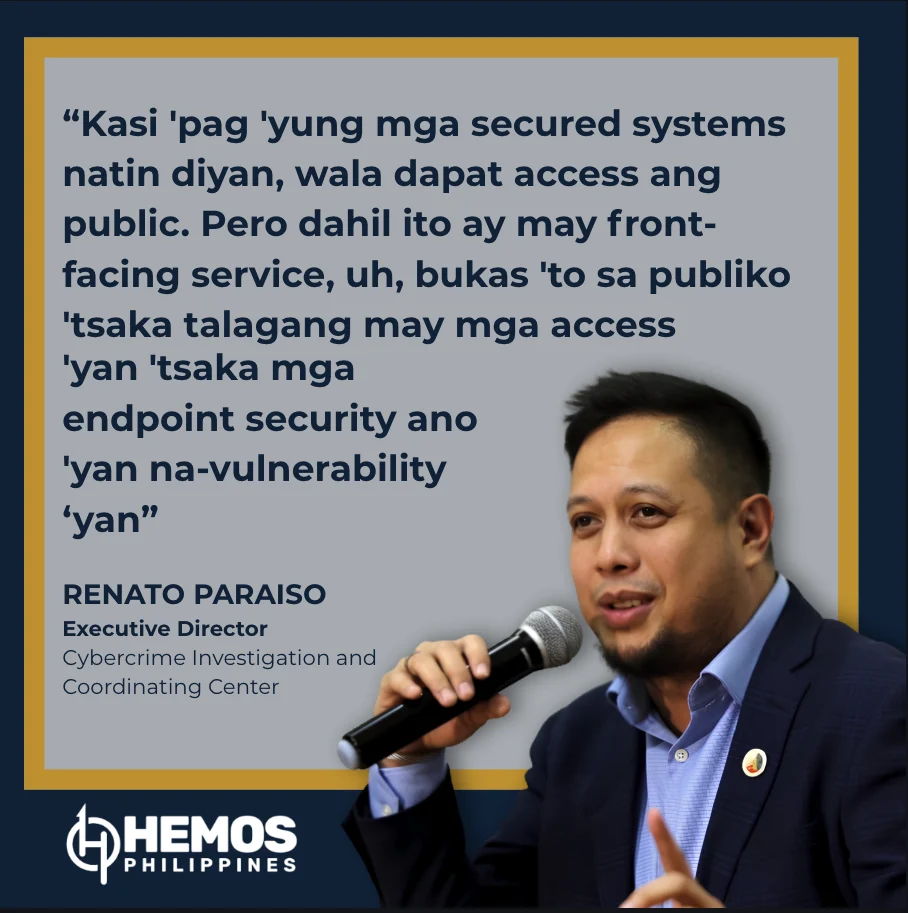
None of this is new. The 2016 Comelec leak involved about 55 million registered voters, and a 2023 report called the PhilHealth ransomware attack the largest government data breach since then, with millions of members affected. In April 2026 the BIR added a public posting duty for online sellers and creators, and in October it suspended it.
In this case the duty to hand over data came first, and the account of how it was protected has yet to arrive.
The agencies hold the data and, by the NPC’s account, the obligations that come with it. The registrants hold the checklist, along with a TIN, birth date, and address that do not reset.
More developments that reshape the operating environment in National Signal section of Hemos PH.