Quick Read
- Malacañang said on Nov 22 that Aeta thumbprints on Pax Silica documents need authentication, and BCDA’s new chief is checking them.
- The Pax Silica land clearance for the 1,620-hectare New Clark City site now depends on whether those documents, and the consent behind them, hold up.
- Aeta farmers carry the immediate cost, and locators and lenders carry the next one if clearance is later challenged.
- BCDA changed leaders on Nov 13, so the official now verifying the paper did not make the earlier assurances on consultation.
Malacañang has asked that thumbprints Aeta community members allegedly placed on documents tied to Pax Silica be authenticated. The request turns a consent dispute into a diligence problem, because Pax Silica land clearance for the 1,620-hectare New Clark City site now depends on paper under review. The farmers named in the documents carry the cost first, and the firms and banks planning to build on the site carry the next one.
The Palace Has Called for Authentication, Not Reached a Finding
Press Officer Claire Castro said in a video statement on Sunday, Nov 22 that the thumbprints need to be authenticated. She said the government would not let anyone be disadvantaged or sign a document they did not understand. BCDA President and CEO Ariel Nepomuceno, she said, has ordered a deeper probe into whether the documents are genuine.
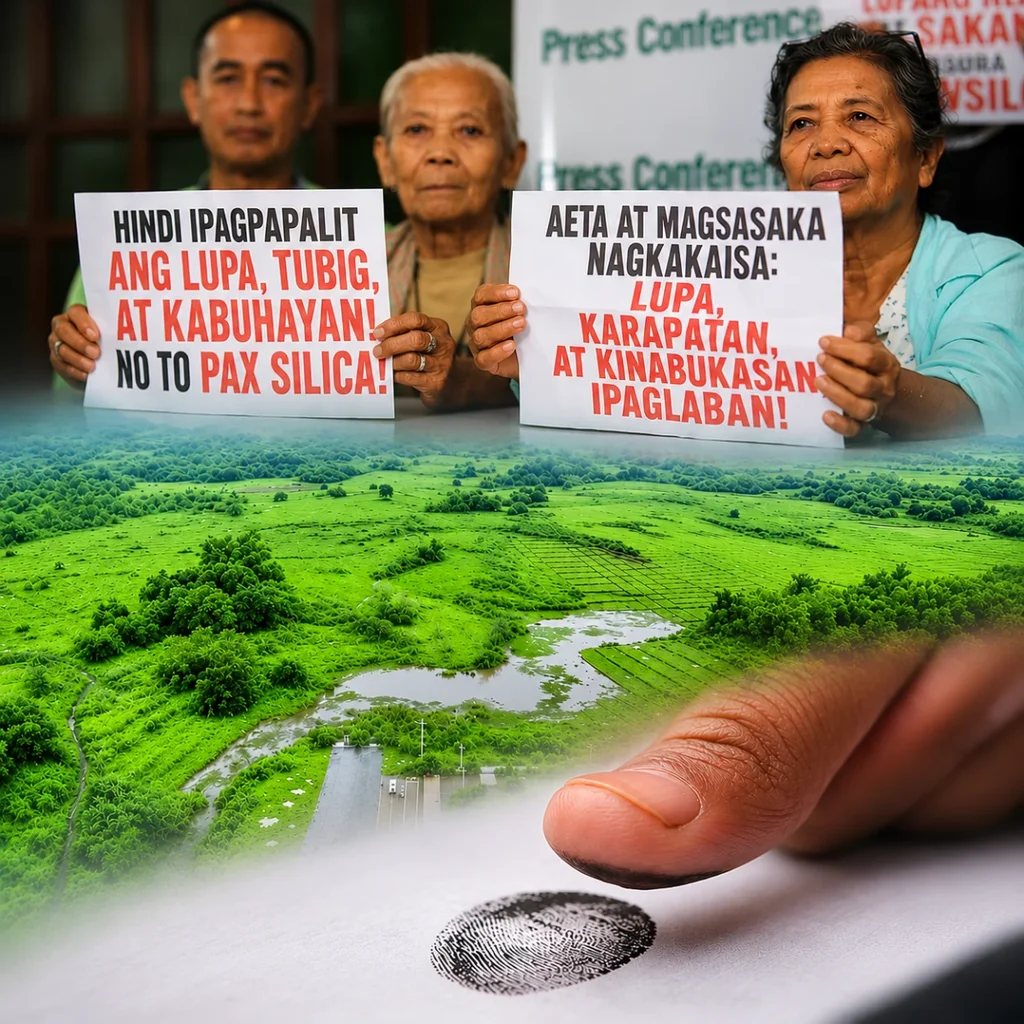
One alleged waiver has been made public. According to published reports, a journalist posted it on social media. It bears the thumbprint of an Aeta farmer in Barangay O’Donnell, Capas, described in those reports as someone who can barely read or write. The Filipino-language document says the signatory is not the rightful owner of the land being tilled, traces the land to the government through the former Clark Air Base, and says the signatory chose ₱30,000 in financial aid from BCDA. No agency has made a finding on it, and the number of people who signed has not been reported.

A tribal leader quoted in published reports gave a separate figure. BCDA offered ₱30 per square meter for the property, the leader said, and every community member rejected it. The two amounts are different things: a per-square-meter offer that was reportedly rejected, and a lump-sum aid payment named in the alleged waiver.
The Pax Silica Land Clearance Turns on Whether Consent Was Real
Human Rights Watch said on Nov 16 that available information indicates BCDA never secured the free, prior, and informed consent of Aeta community members, and that the hub would displace hundreds of Indigenous people and farmers. It said BCDA’s early July letters to Sapang Kawayan residents told them their land would be affected by New Clark City and invited them to talk, without mentioning the planned hub.
BCDA’s position is that no Aeta ancestral domain land covered by certificates of ancestral domain title is being used for Pax Silica. In August the Palace added that the site sits in a buildable zone designated in 2019 and that consultations with affected parties were ongoing. A mapping group, Countermapping PH, says an overlay of the site on ancestral domain maps shows part of it inside an existing titled ancestral domain.

Those accounts do not fit together, and a signed waiver is the document that would settle the question on paper. That is why its authenticity matters beyond the one farmer whose thumbprint appears on it. A waiver that holds supports the Pax Silica land clearance. A waiver that fails, or that records consent nobody can show was informed, can leave the parcel open to challenge.
A New BCDA Chief Is Checking Documents Beside His Predecessor’s Statements
President Marcos swore in Nepomuceno as BCDA head on Nov 13, replacing Joshua Bingcang. At a media forum in September, Bingcang said BCDA had always consulted communities whenever a project went up in New Clark City. Nepomuceno is less than two weeks into the job, and the documents he is checking sit beside those statements on consultation.
The agency checking the paper is also the agency delivering the project. That check settles the government’s own record of the Pax Silica land clearance. It does not by itself settle what a financier’s lawyers will accept.

Locators and Lenders Inherit the Title Question
Locators, the firms that would lease plots in the zone, and the banks and funds financing them, face a clear sequence. If the thumbprints fail authentication or consent is later found defective, clearance for the affected parcels can be challenged. A challenge to the Pax Silica land clearance on one parcel invites the same questions about parcels cleared the same way, and each question becomes a delay, an added diligence step, or a condition on financing. Locators with fixed equipment delivery dates absorb the cost of waiting more heavily than those still choosing a site. Lenders weigh the land behind a loan, and a consent dispute over that land is hard to price while it stays unresolved.
Marcos said on Nov 20 in Shenzhen that the government is not backing out of Pax Silica and that no deal has been signed yet. He also said there will be no data centers at the hub. With nothing signed, the clearance question can still be settled before any lease or loan depends on it. Once those contracts exist, the question moves inside them.
The Construction Schedule Has Less Room
Any groundbreaking target has less room if the Pax Silica land clearance needs re-verification parcel by parcel. The delay lands on the manufacturers, contractors, and lenders that planned around that target, and it arrives before a single plot is leased.

The Aeta farmers whose thumbprints are on the documents carry the first cost, because the paper, if authentic, records them giving up a claim. The next cost lands on whoever signs a lease or a loan against land cleared on that paper. A failed authentication would reach lenders’ diligence files first, and the construction schedule would absorb it after.
More developments that reshape the operating environment in National Signal section of Hemos PH.