Quick Read
- Wage Order XII-26 raises the Soccsksargen minimum by ₱41 in two steps, ₱16 on November 22 and ₱25 on January 1, 2027.
- Regional wage orders in Soccsksargen, Central Visayas and Calabarzon granted ₱25 to ₱45 against Metro Manila’s ₱85, so each provincial floor falls further behind the capital’s in pesos.
- Employers paying at or near the floor in agriculture, retail and service carry the payroll step, and those with ranked pay face narrower gaps between levels.
- Provincial operators that compete with Manila-based firms keep a wage-floor edge that grows from about 34% to about 36% below the capital’s.
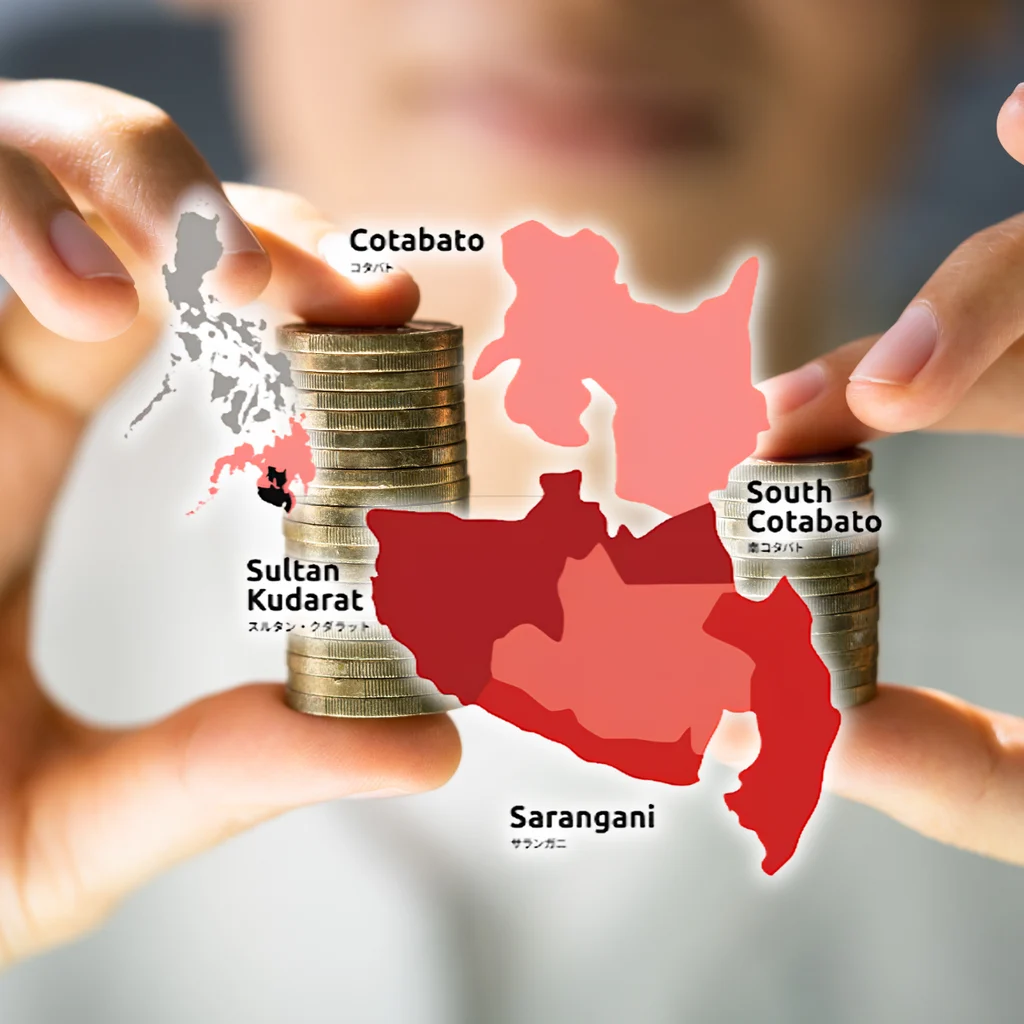
Soccsksargen’s new wage order raises the daily minimum by ₱41. Metro Manila’s raised it by ₱85. Across the regional wage orders issued this year, provincial floors rose by less than the capital’s, so the pay difference between Manila and the provinces widens with every order.
That matters less for what workers take home on November 22 than for who pays and who keeps an edge. Employers at the floor carry the payroll step. Provincial operators who compete with Manila-based firms keep a labor-cost edge that grows. Workers in the region fall further behind the capital even as their pay rises.
Wage Order XII-26 Lands in Two Steps
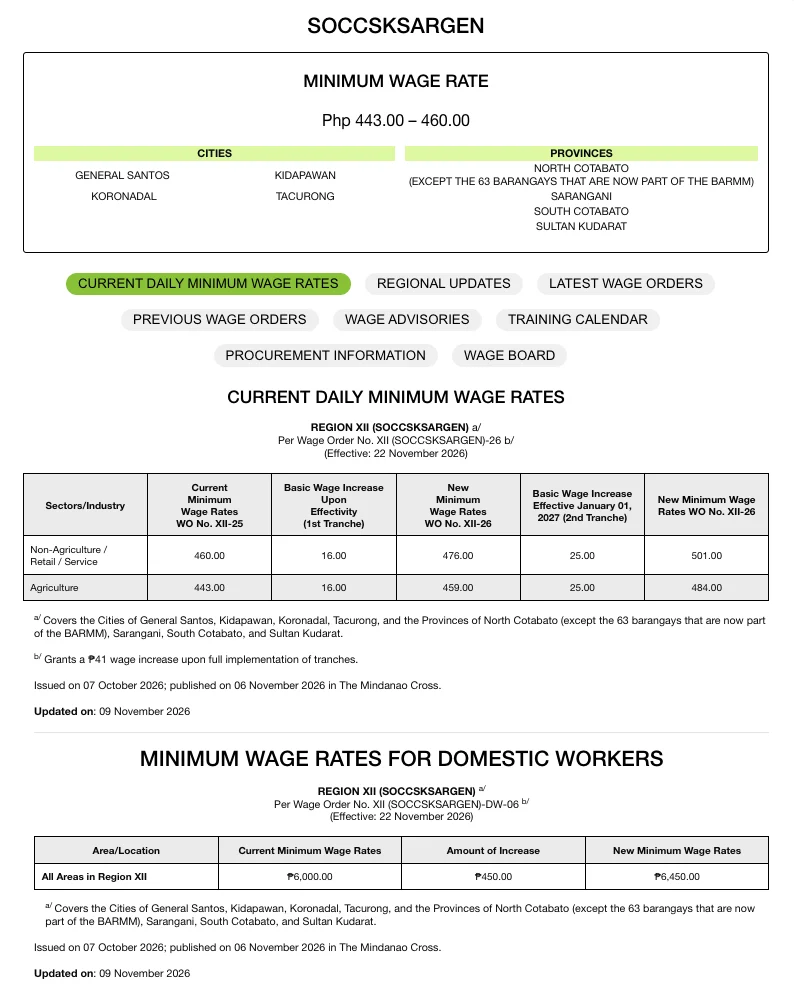
Wage Order XII-26 was issued on October 7 and published on November 6. It takes effect on November 22. The first step is ₱16 a day and the second, ₱25, follows on January 1, 2027. For non-agriculture, retail and service workers, the floor moves from ₱460 to ₱476, then to ₱501. For agriculture, it moves from ₱443 to ₱459, then to ₱484.

The order covers General Santos, Kidapawan, Koronadal and Tacurong, plus South Cotabato, Sarangani, Sultan Kudarat and North Cotabato. The 63 North Cotabato barangays now part of BARMM are excluded.
Regional Wage Orders Delivered Less Than Manila’s Increase
Metro Manila’s floor goes from ₱695 to ₱780 in two steps. The first ₱60 took effect in July. The remaining ₱25 follows on January 20, 2027. In Central Visayas, the Class A rate covering Expanded Metro Cebu rose ₱42 on October 14, from ₱540 to ₱582. Calabarzon’s order, in effect since October 26, adds ₱25 to ₱45 depending on sector and locality.
In pesos, Manila’s increase is about twice the ₱41 and ₱42 granted in Soccsksargen and Central Visayas. In percentage terms the difference narrows but stays clear: about 12% in Metro Manila, about 9% in Soccsksargen and about 8% in Central Visayas Class A.

Regional wage orders are set board by board, so each region’s increase reflects its own board’s weighing of worker needs and what employers can pay. Across regions, the result is a smaller raise on a lower base.
The Gap Grows Even as Every Floor Rises
According to an earlier report, Soccsksargen entered the cycle with the lowest floor in the country, at ₱443 to ₱460. Before the cycle, Metro Manila paid ₱695 and Soccsksargen ₱460, a difference of ₱235 a day. Once both orders are fully in effect, the floors are ₱780 and ₱501, a difference of ₱279. A minimum wage earner in Soccsksargen goes from earning about 66% of the Manila floor to about 64%.
Central Visayas runs in the same direction. The Class A difference goes from ₱155 to ₱198, and the floor falls from about 78% of Manila’s to about 75%. Workers’ groups in Cebu made the same point when that order was approved, citing a ₱173 daily difference against the Manila rate at the time. Regional wage orders raise every floor, and they still leave the provinces with less of the capital’s pay each round.

Prices leave little room. Central Visayas inflation ran at 8.1% in August and averaged 8.4% from January to August, according to PSA figures cited in published reports. The ₱42 increase is about 7.8% of the old Class A floor and about 8.4% of the old Class B floor. That roughly matches prices and closes none of the gap with Manila.
Kasambahay Floors Follow the Same Pattern
Soccsksargen’s domestic worker minimum rises ₱450 to ₱6,450 a month on November 22. Central Visayas’ rose ₱500 to ₱7,500 on October 14, and Calabarzon’s rose ₱750 to ₱7,500 on October 26. Metro Manila’s has been ₱7,800 since a ₱800 increase in February.
Soccsksargen’s ₱450 is the smallest of the four increases. Its floor sits ₱1,350 below Manila’s and ₱1,050 below the other two regions’.

Floor-Paying Employers Absorb the Payroll Step First
For an employer at the floor in agriculture or retail and service, the November 22 step adds ₱16 a day per worker, about ₱416 a month at 26 paid days. The full ₱41 adds about ₱1,066 a month. The steps are unequal. The first is about 3.5% of the current floor and the second about 5.3% of the new one, so payroll absorbs the smaller step first and the larger one about six weeks later.
Employers above the floor face a second problem. When the floor rises and the rank above it does not, pay gaps between levels narrow. That is wage distortion pressure, and it forces a choice between lifting the ranks above the floor and accepting a flatter pay ladder.
Employer pushback has already surfaced elsewhere in the cycle. In Central Visayas, the Mandaue Chamber of Commerce and Industry asked the wage board to deny the increase, arguing that the region had implemented its previous order only in October 2025.
Provincial Operators Keep a Labor-Cost Edge
Operators in Soccsksargen who compete with Manila-based firms pay a floor about 36% below the capital’s once both orders are in effect, up from about 34% before the cycle. That edge applies to the wage floor only. Productivity, logistics and skills decide whether it becomes margin.
By January 20, Metro Manila’s floor will sit ₱279 a day above Soccsksargen’s, ₱44 more than before the cycle began. Employers at the floor will have paid both steps of their own order, and their workers will hold a floor further behind the capital’s than at the start of the year. What moves first is the pay ladder above the floor, where employers either lift the ranks or let the gaps between levels close.
More developments that reshape the operating environment in National Signal section of Hemos PH.