Quick Read
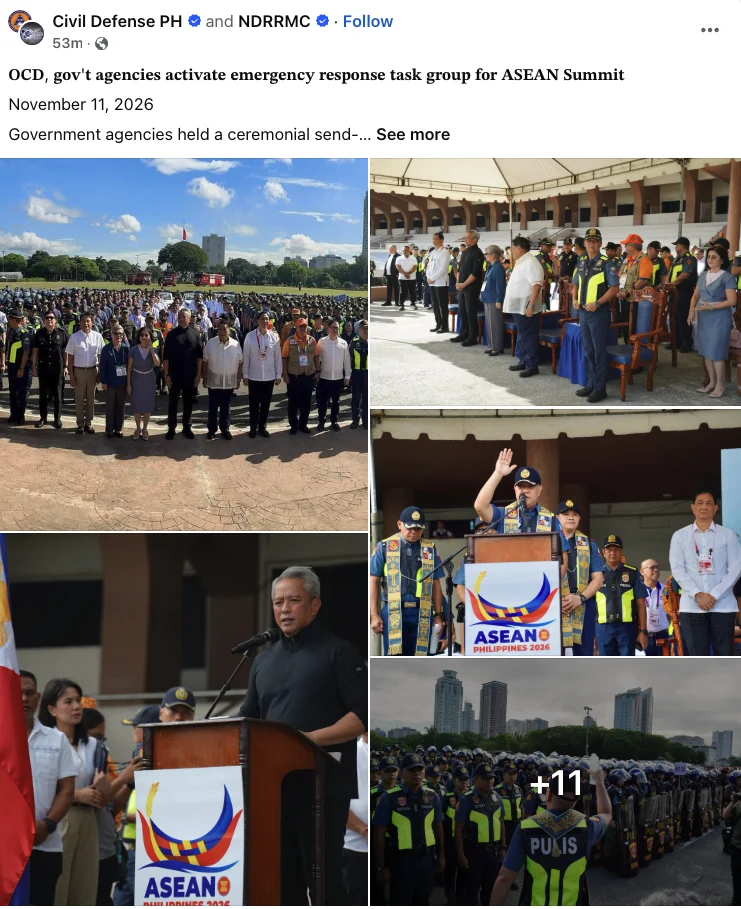
- The ASEAN Summit cleanup cleared vendors from the streets around Baclaran Church for 19 days and put art barriers along Diokno Boulevard in Pasay.
- The Palace calls the clearing a security measure, and an opposition lawmaker says it conceals poverty from delegates.
- The same routine ran under a different president for the 2012 Asian Development Bank meeting and the 2015 APEC summit.
- Baclaran vendors sell on temporary permission, so the city can remove them without payment and set conditions for their return.
- Congress appropriated ₱22.9 billion for hosting across two budgets, and no agency has published what the barriers cost.
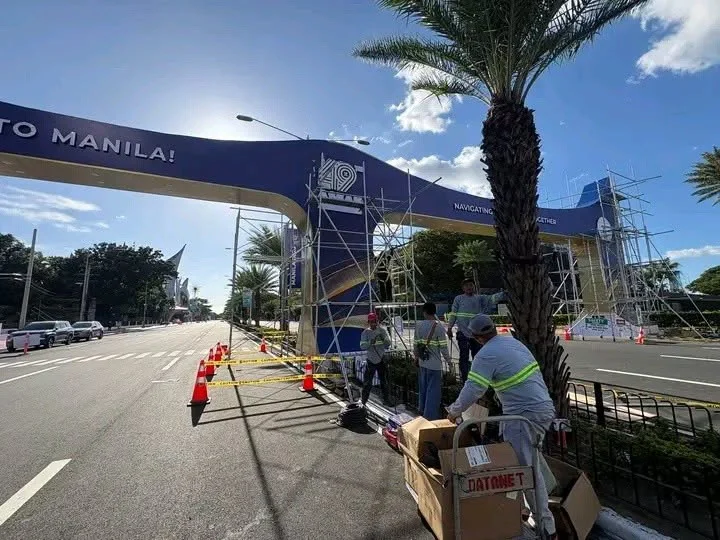
The streets around Baclaran Church have no vendors this week. Art barriers line Diokno Boulevard, boards cover the walls of Tambo Bridge, and the roads to the convention center have been cleared for the 49th ASEAN Summit. An opposition lawmaker calls the ASEAN Summit cleanup a cover for poverty. The Palace calls it security. Both are arguing about motive, and the record points to something plainer. Metro Manila has run this routine under more than one president, and it keeps working because the people being cleared hold no right to stay.
What the ASEAN Summit Cleanup Covers
Parañaque put its part in writing. A city statement dated November 8 bars ambulant vendors from Roxas Boulevard and its service road, Redemptorist Road up to Quirino Avenue, and the area beneath the LRT from November 2 to 20. That is 19 days without selling. City and MMDA crews cleared the Baclaran roads in early November. About 50 e-trikes were towed from Roxas Boulevard on November 10, and owners can reclaim them after the summit, according to published reports.
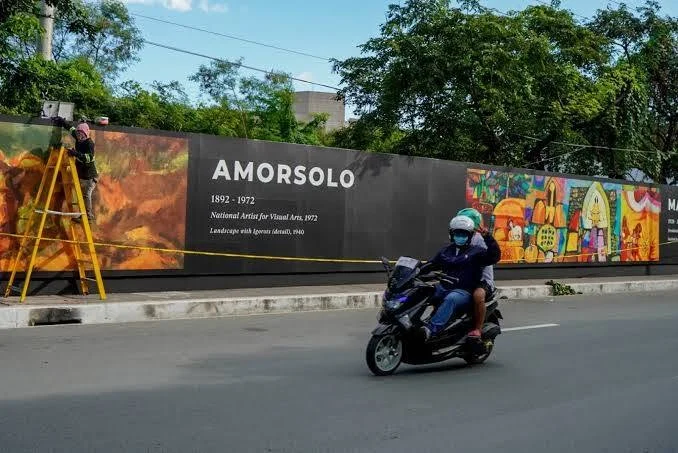
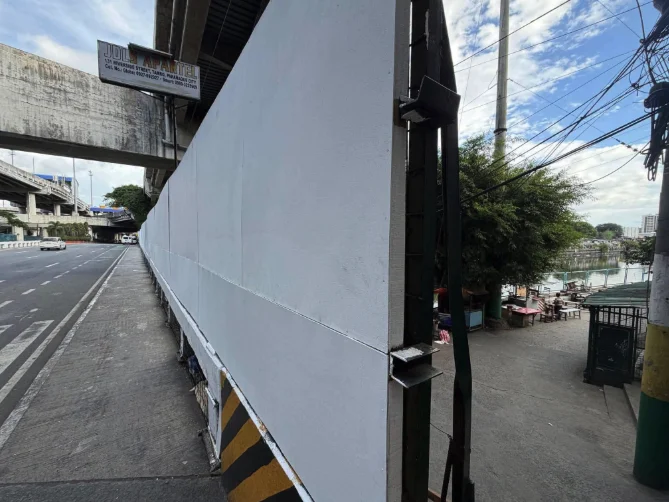
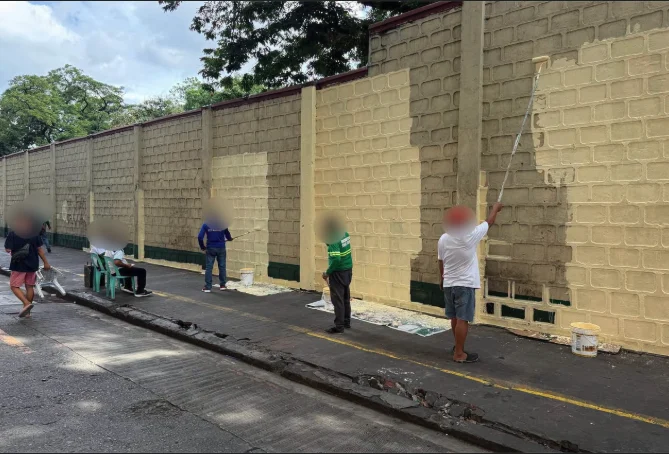
Pasay’s part is easier to see. Barriers carrying replicas of National Artists’ works stand along Diokno Boulevard near the convention center, where the city also ordered small eateries to close. Walls along Tambo Bridge in Parañaque were boarded up by November 10, and residents said the boards had been there for two weeks. Both city governments worked with the ASEAN National Organizing Council, according to published reports.

ACT Teachers Rep. Antonio Tinio has accused the administration of using the barriers and the clearing to conceal poverty from delegates. Palace Press Officer Claire Castro answered on November 10 that the operations are security preparations for nearly 20 heads of state, that they go beyond beautification, and that the MMDA cleans regularly.
The Same Wall Went Up in 2012
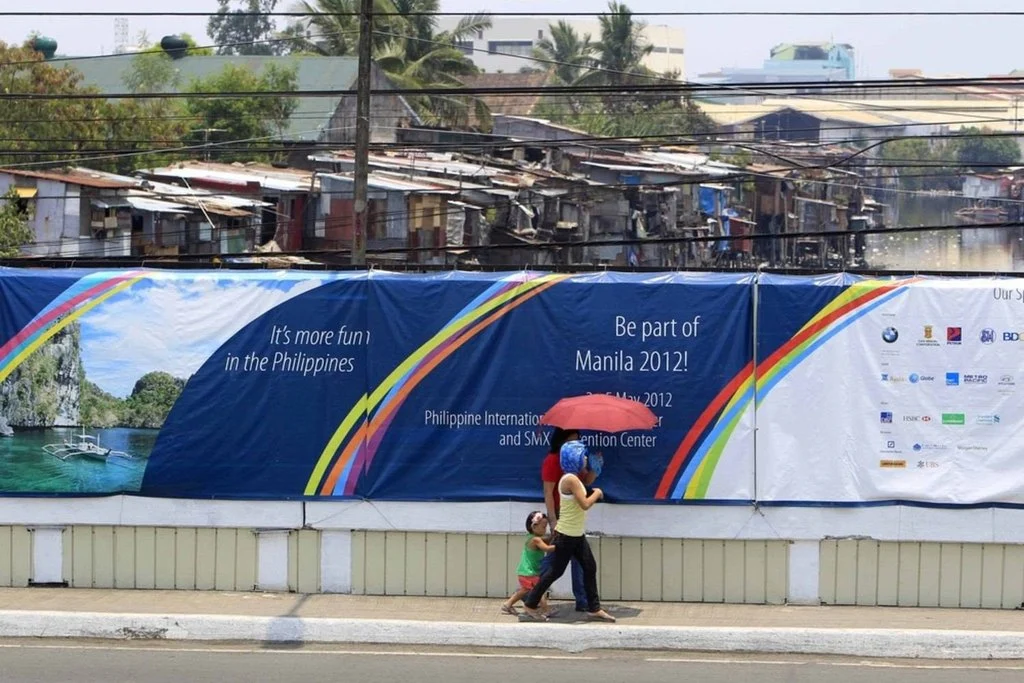
The ASEAN Summit cleanup follows a routine that predates this administration. In April 2012, under President Benigno Aquino III, the MMDA built a fence on a bridge along the highway from the airport to the convention center. Tarpaulins promoting tourism and the Asian Development Bank meeting were draped over it a month before more than 4,000 delegates arrived, according to Human Rights Watch. Behind it was a creekside slum. The presidential spokesman at the time, Ricky Carandang, defended it by saying “any country will do a little fixing up before a guest comes.” Francis Tolentino, then MMDA chairman, said the aim was to show an orderly Metro Manila and denied that the poor were being kept out of view.
In 2015 the clearing reached people living on the street. Human Rights Watch said hundreds of homeless people, including 140 children, were rounded up ahead of the APEC summit and taken to a facility run by the Manila city government. The social welfare department said its outreach ran with or without APEC. Street dwellers were back on Roxas Boulevard before the summit had ended.
| Event | What was done | Official explanation | What followed |
|---|---|---|---|
| 2012 ADB meeting | MMDA fenced a bridge on the airport route and covered it with tarpaulins | A little fixing up before guests arrive | The wall was described as temporary |
| 2015 APEC summit | Hundreds of street dwellers rounded up, by Human Rights Watch’s count | Outreach that runs with or without APEC | Street dwellers returned before the summit ended |
| 2026 ASEAN Summit | Vending bans, eatery closures, art barriers, boarded bridge walls | Security for nearly 20 heads of state | Bans lapse November 20, return is conditional |
Three events and two presidents share one set of agencies. The MMDA and the city halls carry the practice from one administration to the next.
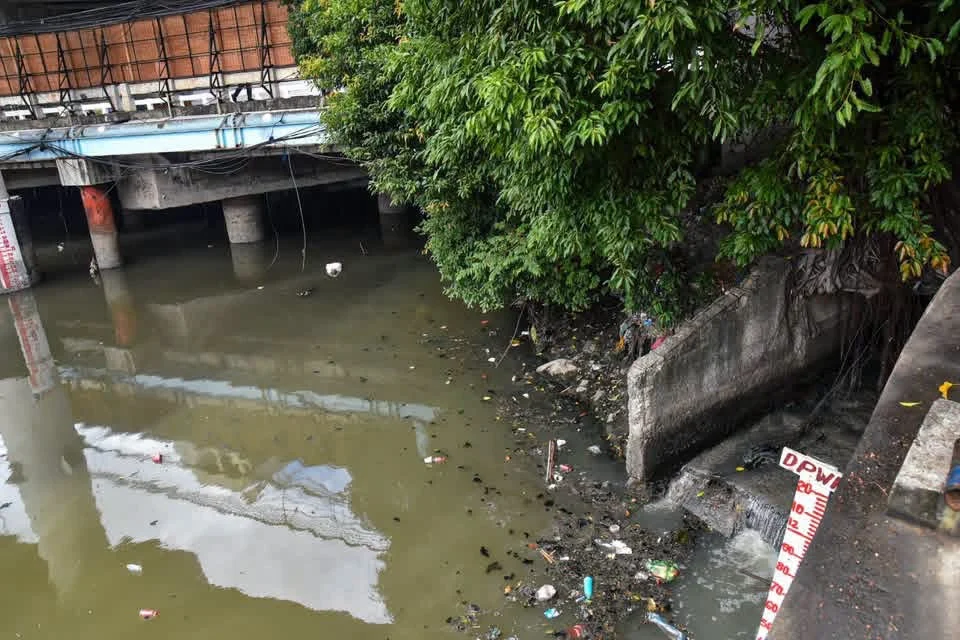
Baclaran Vendors Sell on Temporary Permission
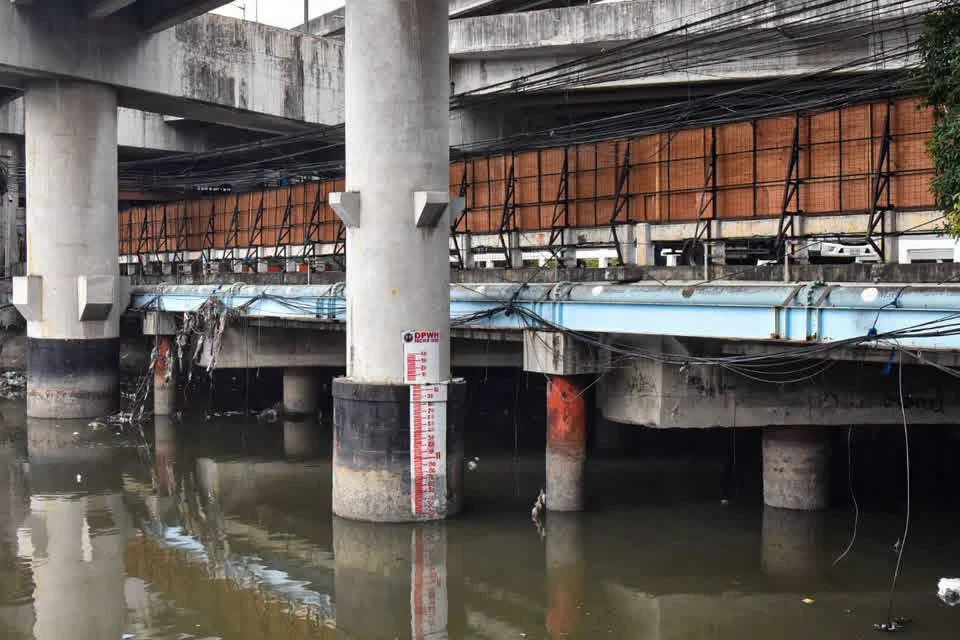
The practice is cheap because of how the vendors hold their spots. Parañaque’s statement says street vending is temporarily permitted in Baclaran while the Baclaran Gateway Market is being built near the water channel across from the Redemptorist Church. The statement, as reported, gives no completion date.

That arrangement decides who pays. A vendor selling on permission has nothing to claim when the permission is suspended. The city can clear the street on its own notice, owe nothing for the lost days, and attach terms to the return. Parañaque has done all three. Vendors may come back after the summit, the city said, provided their operations are orderly. A vendor outside Baclaran Church said no assistance had been given and no return date set, according to published reports.
In Pasay, the social welfare department gave about 30 displaced vendors up to ₱10,000 each. Parañaque’s statement, as reported, mentions no payment.
₱22.9 Billion Was Appropriated, the Barriers Carry No Price
Congress appropriated ₱5.4 billion in the 2025 budget and ₱17.5 billion in the 2026 budget for hosting, a combined ₱22.9 billion, according to a House resolution filed in March. Executive Secretary Ralph Recto said that month that the President had ordered non-essential hosting activities scaled down to save on expenses. The same resolution notes that the 2017 hosting was allocated ₱16.7 billion and disbursed about half.

No agency has published what the barriers, boards, and repainting cost, or which office paid for them. The ASEAN Summit cleanup has a known bill on one side only. A Baclaran vendor loses 19 days of sales, and an e-trike driver loses the vehicle until the delegates leave.
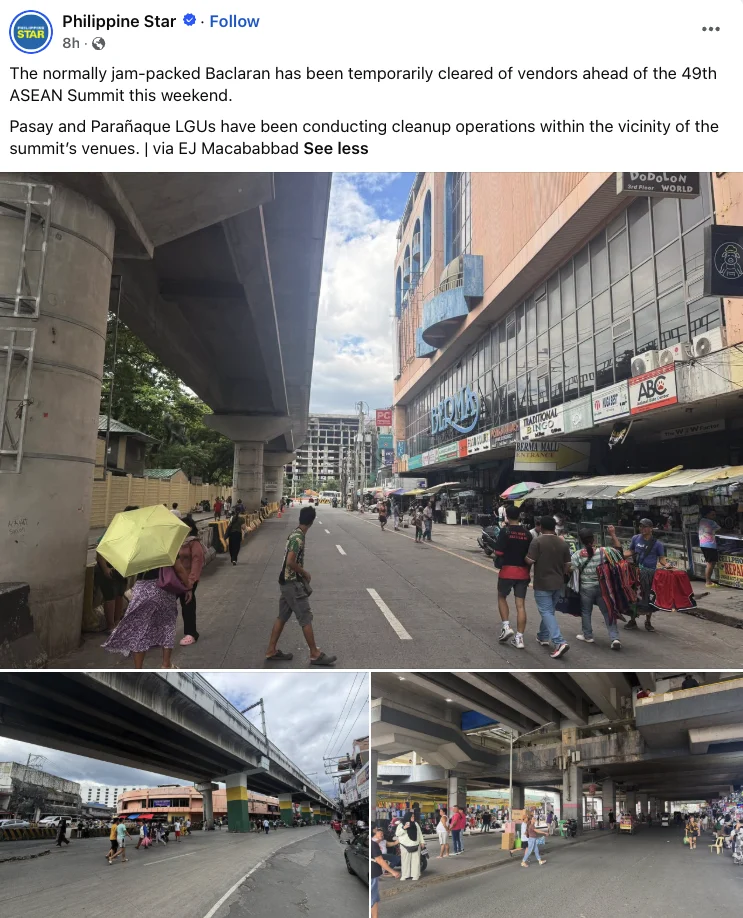
November 20 Returns the Vendors on the City’s Terms
Everything in the ASEAN Summit cleanup carries an end date. Parañaque’s ban lapses on November 20, and so do Pasay’s road closures and its ban on public events. The barriers were put up as temporary.
The arrangement that made it cheap stays. Vendors return to the same streets with the same temporary permission, now with a condition attached, and the permanent market still has no date. City halls and the organizing council got clear routes for the summit. The vendors and drivers who made way paid for it in lost income, and nothing in the ASEAN Summit cleanup changes their position before the next state event. The first thing to move is the return itself, and the city decides what counts as orderly.

More developments that reshape the operating environment in National Signal section of Hemos PH.