GCash is testing an assistant that understands account activity and prepares purchases, raising new questions about the information behind its recommendations.
Quick Read
- Gabby AI may view GCash wallet balances and transaction histories, but it cannot modify account records.
- The pilot is restricted to selected, fully verified customers, with Buy Load as its current transaction function.
- Customers must confirm load purchases, and GCash says recipient numbers and purchase confirmations do not reach the AI model.
- GCash may review and analyze Gabby conversations, while the feature’s specific retention period is not stated in its published terms.
Gabby AI can use a customer’s wallet balance and transaction history to answer questions inside the app. It can also recommend mobile load options based on past preferences. Yet the company draws a firm boundary around payment execution. Gabby can prepare a load purchase, but the customer must approve it before GCash processes the payment.
That makes Gabby more than a conventional help chatbot, without making it an autonomous financial agent. The assistant brings account information into a conversational interface, where users can ask for guidance and move toward a transaction without navigating as many menus. During the pilot, access is limited to customers selected by GCash who have fully verified accounts.
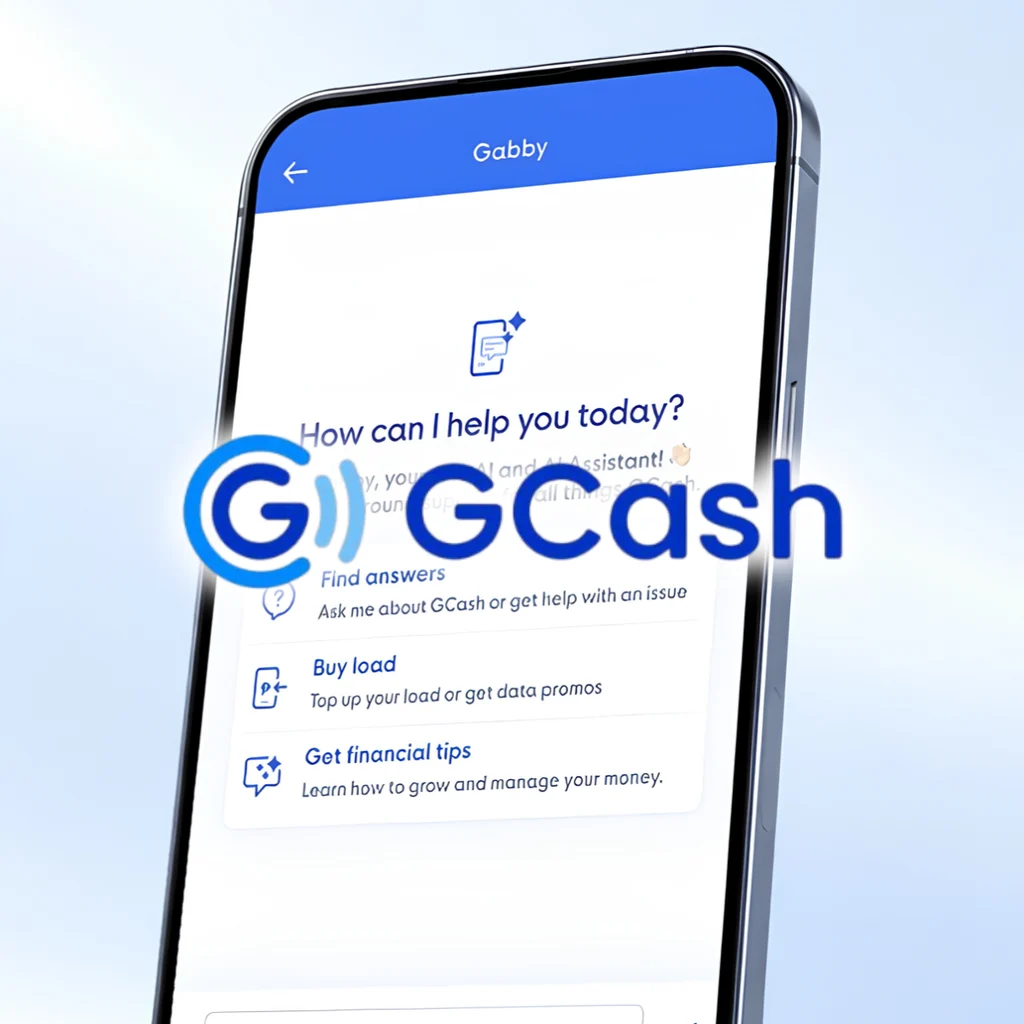
Gabby AI Reads Account Information but Cannot Change It
The Gabby terms identify four information categories available to the assistant. They include a wallet balance and transaction history, mobile network and previous load amount, recent Buy Load recipients, and GCash Help Center or financial learning content. The personal information serves different purposes. Account records can supply context for answers, while loading preferences help narrow down suitable offers.
The terms describe wallet access as view only. Gabby cannot change the balance, rewrite transaction records or independently move money through the account. Recent load recipients are treated differently from other account information. GCash says they are stored on the user’s device and cleared when the user logs out or changes accounts.
GCash also says a recipient’s mobile number and purchase confirmation are handled by its standard payment systems rather than sent to the AI model. This is a meaningful technical distinction. Having permission to retrieve information within the GCash app does not necessarily mean that every retrieved detail is transmitted to the model generating the response.
The published terms do not, however, specify how much transaction history Gabby may retrieve for an individual request or exactly which account details are passed to the underlying model. That matters as the assistant becomes more useful. A question about the latest load purchase should not necessarily require the same information as a broader request about spending patterns.

Load Purchases Still Need User Approval
Buy Load is Gabby AI’s documented purchasing function. A user can browse available promotions through Gabby, receive suggestions based on previous activity, and review a purchase summary. That summary can show the amount, any fees and the remaining wallet balance before payment.
The assistant does not complete the purchase on its own. GCash says the summary is informational rather than an authorization, and the final amount, offer availability and transaction result are determined by its regular payment processing system. Customers therefore retain the final decision at the point where money would be spent.
That separation is important for financial apps experimenting with conversational interfaces. Suggesting a product and executing a payment create different responsibilities. Gabby currently helps with selection and preparation, while an established transaction flow handles the actual charge. The terms do not establish that the assistant can independently send funds, pay bills or purchase investments.

GCash Can Review Conversations With Gabby
A less visible aspect of Gabby’s design appears in its own terms. GCash says it will review and analyze conversations with the assistant to improve products, services and business practices. It also warns users not to enter MPINs, one time passwords, card numbers or government identification numbers into the chat.
This does not establish that employees manually read every conversation. Nor does it show that individual messages are used to train the model. But it does mean the exchanges have a stated business purpose beyond producing an immediate reply. Questions about spending, personal finances and service problems could all become part of a conversation that GCash analyzes.
The company’s Privacy Notice, effective June 15, 2026, separately allows the use of certain account activity, transaction indicators, preferences and other information to train, test and improve AI systems. It says aggregated, deidentified, minimized or synthetic information is used where possible. That broad policy does not establish whether Gabby conversations themselves become training material.

The Gabby AI terms also do not give a feature specific retention period for chat records. GCash’s broader privacy notice describes general rights to access, correct, object to or request deletion of personal data, subject to applicable legal limits. For customers, the practical questions are how long an AI conversation is kept, who can access it and which controls apply specifically to Gabby.
Personalized Suggestions Introduce a Commercial Choice
Gabby AI recommendations may save time for frequent GCash users. Someone who normally buys load from the same network can receive an appropriate suggestion without searching through every promotion. For GCash, the feature may also keep more customer activity within its own interface and reduce the need to navigate separate product pages.
The difficulty comes when convenience and commercial recommendations overlap. If two load offers suit a customer’s preferences, the reasons for ranking one above the other matter. The better choice might depend on price, validity, data allowance or a previous purchase. GCash’s terms confirm that preferences inform suggestions, but they do not describe a complete ranking method or whether commercial arrangements affect placement.
There is no established evidence that Gabby favors paid promotions. The issue is transparency, especially if GCash later uses similar technology to guide people toward borrowing, insurance or investment products. Recommending mobile load is a relatively narrow task. Recommending credit to someone using their transaction history carries much greater financial consequences.
This distinction is consistent with the Bangko Sentral ng Pilipinas’ June 2026 AI governance guidance, which encourages financial institutions to explain how AI recommendations are produced and maintain human oversight. The principles are nonbinding and do not establish any breach by GCash. They provide a useful benchmark for customer facing AI tools that may influence financial decisions.
Account Answers Are Not Official Transaction Records
GCash cautions that Gabby can produce inaccurate or outdated answers, even when describing a balance or summarizing transactions. Its terms identify the relevant wallet and transaction pages in the app as the official records. The company also states that Gabby is not an investment adviser and that users should verify financial information before relying on it.

This is an unusually important limitation for an assistant with access to account data. A customer may assume that an answer drawn from the app is as reliable as the app’s underlying records. GCash’s warning makes clear that the assistant’s response remains a generated interpretation, not the definitive account statement.
Gabby AI’s pilot is modest in the transactions it can complete, but more consequential in the information it can interpret. The product’s value depends on keeping those two boundaries visible to customers. A financial assistant becomes genuinely useful when it can explain the right information and prepare a task without leaving users uncertain about which details are official or who has the authority to approve a payment.
Monitor the systems, tools, and digital infrastructure decisions redefining competitive advantage in the Tech section of Hemos PH.