Quick Read
- The Minnesota poultry import ban admits only product made on or before August 18 and certified heat-treated goods, and port officers must confiscate the rest.
- Only clearances for live domestic and wild birds were revoked, not every clearance as some reports said.
- Germany’s reopening covers only goods slaughtered or produced after November 4, so older stock stays out.
- Peru’s circular lifts the ban on birds alone and is silent on meat, chicks, eggs and semen in its operative clause.
- Brazil supplied half of chicken meat imports in the first half of 2026, which limits what the three circulars can change.
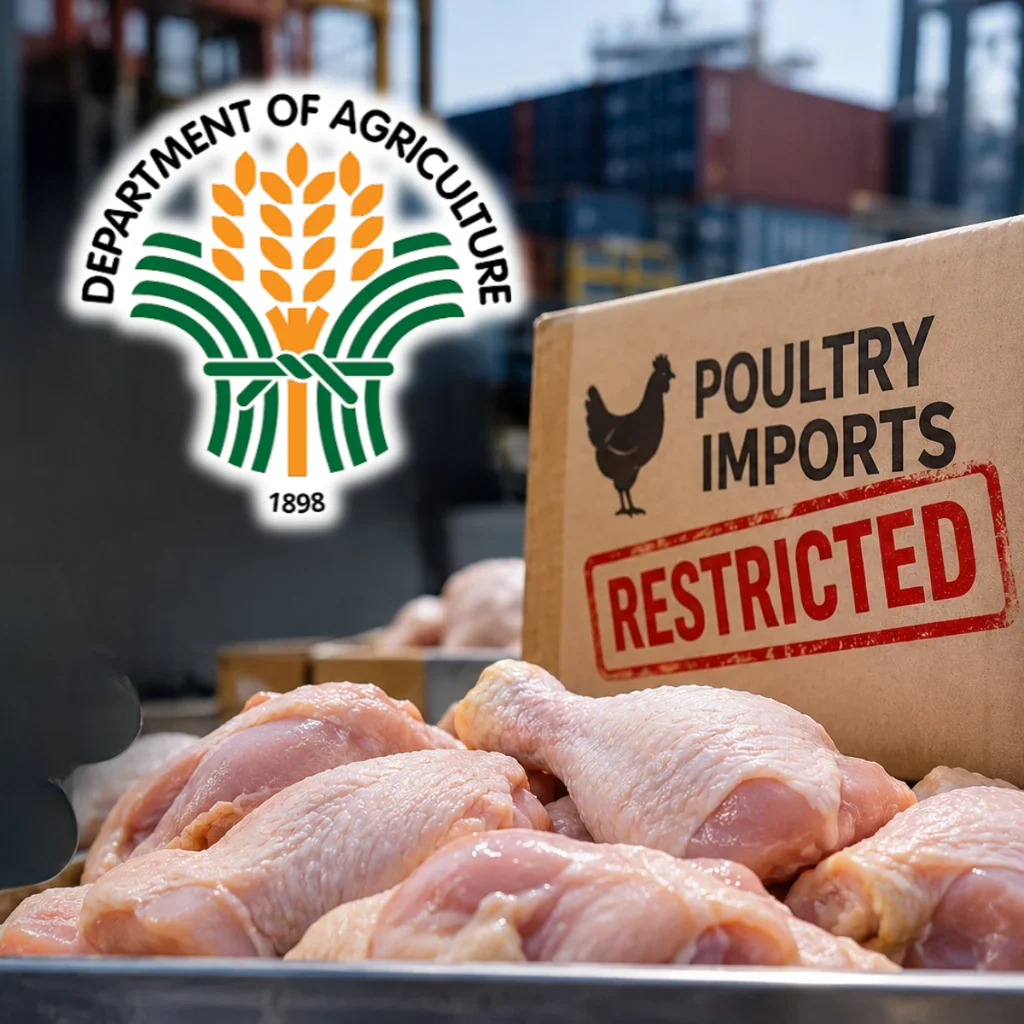
The Department of Agriculture (DA) has put a poultry import ban on Minnesota, and its cutoff looks backward. Under Department Circular 55, signed October 26, bird products made after August 18 cannot enter, even if they are already loaded or sitting at a Philippine port. The reopenings for Germany and Peru that came with it carry limits of their own.
The Minnesota Poultry Import Ban Is Built on Production Dates
Circular 55 rests on a September 1 report from US animal health officials of several H5N1 bird flu outbreaks affecting domestic birds, confirmed by a national veterinary laboratory. Under a 2016 arrangement between Philippine and US veterinary authorities, a statewide ban applies only when three or more counties in a state are affected. The circular says Minnesota met that threshold in its official reports to the World Organisation for Animal Health.
The order does three things at once. It halts the processing of new import clearances for all covered products, which include poultry meat, day-old chicks, eggs and semen. It revokes existing clearances for live domestic and wild birds. And it sets the cutoff: shipments in transit, loaded or accepted at port may enter only if the product was slaughtered or produced on or before August 18, 2026.

Everything else faces stoppage and confiscation by veterinary quarantine officers at major ports, except heat-treated products. Those need a health certificate that states the heating temperature and duration and confirms the raw material was not mixed with other animal-origin materials. The circular was filed with the national administrative register on November 6 and takes effect after publication on the DA website. The text gives no calendar date.
Reports of Revoked Clearances Overstate the Order
Some published reports say the DA revoked all approved import clearances for Minnesota poultry. The text does not. It revokes only clearances for live domestic and wild birds. For meat, chicks, eggs and semen, the order stops new processing and bars cargo by production date.
That changes who is hurt. A clearance for chicken meat is not canceled by the circular, but it no longer carries cargo made after August 18 through the port. The loss shows up as stranded product, not a voided document.

The earlier Minnesota ban came off under Department Circular 41, which was reported on August 26. That is eight days after the new cutoff. Raw Minnesota product that importers lined up after the reopening and that was made after August 18 is shut out. The circular gives no count of how much cargo that is.
Germany and Peru Reopen With Limits Attached
Department Circular 56, dated November 4, lifts the 2020 poultry import ban on Germany, covering birds and their products including poultry meat, day-old chicks, eggs and semen. The DA says Germany is free of bird flu under the World Organisation for Animal Health’s code. By its wording, only goods slaughtered or produced after November 4 may move, so older German stock stays out. The circular takes effect fifteen days after publication and filing, and the DA’s circulars page lists November 22.
Peru is narrower. Circular 54, dated October 26, lifts the 2022 ban on “domestic and wild birds” only. The DA’s risk finding covers live birds kept as pets or in zoos. The operative clause does not mention poultry meat, day-old chicks, eggs or semen, which the 2022 order had also covered, so the text does not settle whether they can enter. Reports that group Peru with Germany as reopening poultry meat describe only Germany’s circular correctly.
Brazil Still Carries the Supply, So the Cost Stays Narrow
Brazil accounted for 50% of Philippine chicken meat imports in the first half of 2026, according to a US Department of Agriculture report, with the United States second. The poultry import ban touches only Minnesota, so Brazilian product and product from other US states move as before. The same report expects imports from the European Union and Canada to grow in volume but lose share as Brazil expands, which leaves Germany little room to change the mix.
The Minnesota poultry import ban changes the most for importers who bought raw product made after August 18, because the DA counts production dates and those cargoes cannot clear the port. Suppliers face a different test in each origin. Minnesota can ship only heat-treated goods with a heating certificate, Germany only product made after November 4, and Peru only live birds. National supply moves little. Brazil supplies half of chicken meat imports, the order covers one state, and no circular carries a volume that would change the mix.

Track more regulatory shifts that affect your business in Policy & Regulation section of Hemos PH.