An engine-swapped Volkswagen bus, a cartoon-inspired pickup and new attention to vehicle maintenance gave the annual custom-car show several stories worth a closer look.
Quick Read
- Manila Auto Salon 2026 featured newly presented custom builds, including a Subaru-powered Volkswagen Kombi and a shortened Toyota Hilux inspired by Toy Story.
- An outfitted plug-in hybrid Nissan Navara showed how electrified pickups can be prepared for camping and overlanding.
- LIQUI MOLY’s local distributor demonstrated an oil authentication system that began rolling out earlier in 2026.
- Schaeffler used the event to highlight repair products, technical support and greater attention to the motorcycle aftermarket.
The Volkswagen Kombi at the Manila Auto Salon 2026 looked familiar until its details came into view. Behind its classic shape sat a turbocharged Subaru engine. Nearby, a Toyota Hilux had been shortened and rebuilt into a version of the Pizza Planet truck from Toy Story.
Those projects gave visitors something more memorable than another collection of aftermarket wheels. The November 13 to 15 event at SMX Convention Center Manila still followed its established format of custom cars, sport trucks and restored vehicles. Its aftermarket marketplace also brought suppliers and service businesses onto the same exhibition floor. This year’s more useful stories came from what individual builders and exhibitors actually showed.
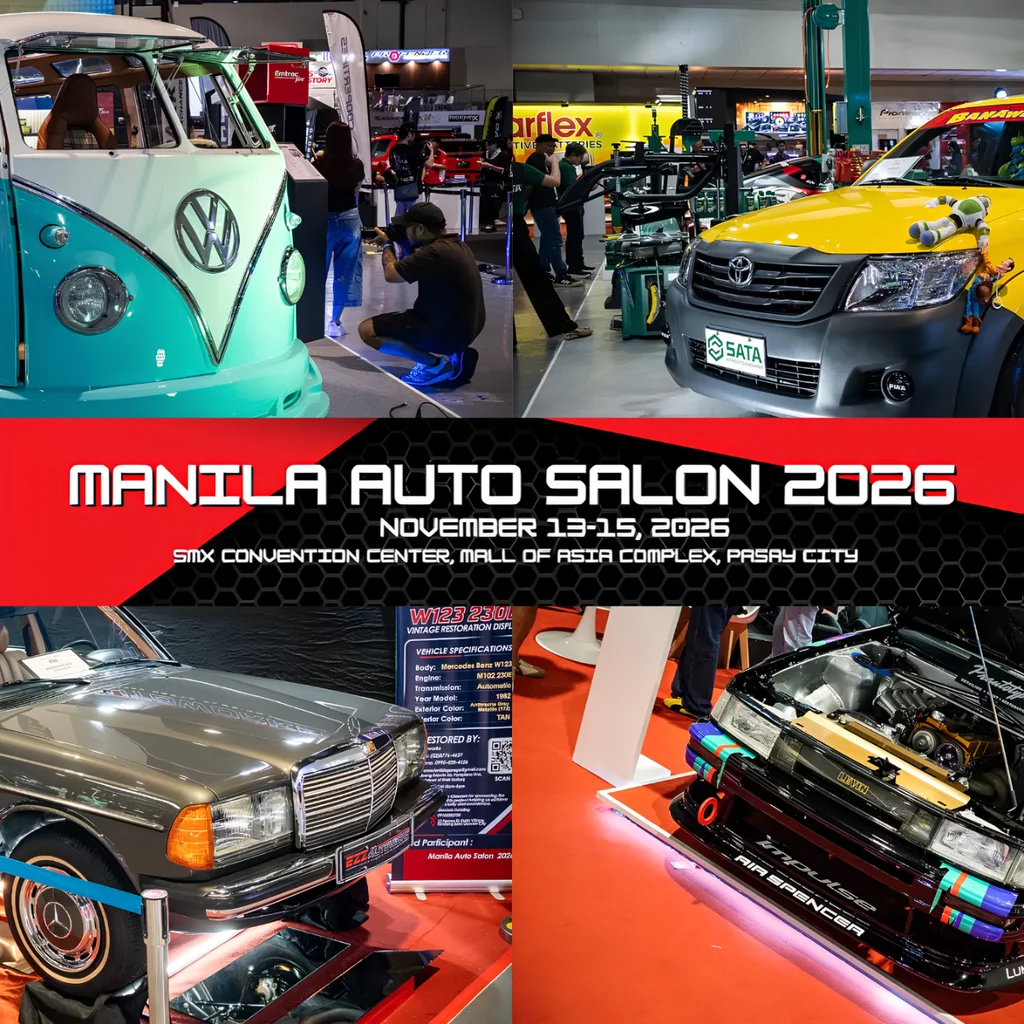
Manila Auto Salon Gave Two Familiar Vehicles Entirely New Identities
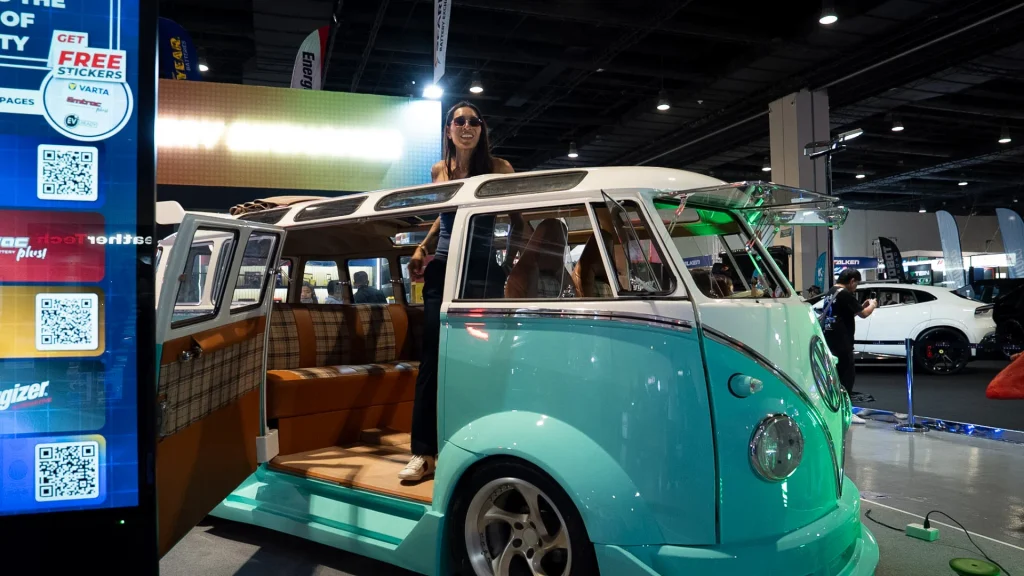
Angie King’s Volkswagen Kombi, called the Kombiroo, was one of the event’s more technically involved projects. Built by Classic Speed, it pairs the bus with a 2.0-liter turbocharged Subaru EJ20 boxer engine. This is not a cosmetic restoration. The engine changes the mechanical character of a vehicle better known for leisurely transport than outright performance.
The conversion goes well beyond its powertrain. A custom 3D-printed widebody gives the bus a wider stance. Its front and rear doors have been reworked into rear-hinged arrangements, while the cabin features brown leather, plaid accents and front bucket seats sourced from a Mazda MX-5. King also used an intercooler taken from a Porsche 911 GT2 RS.
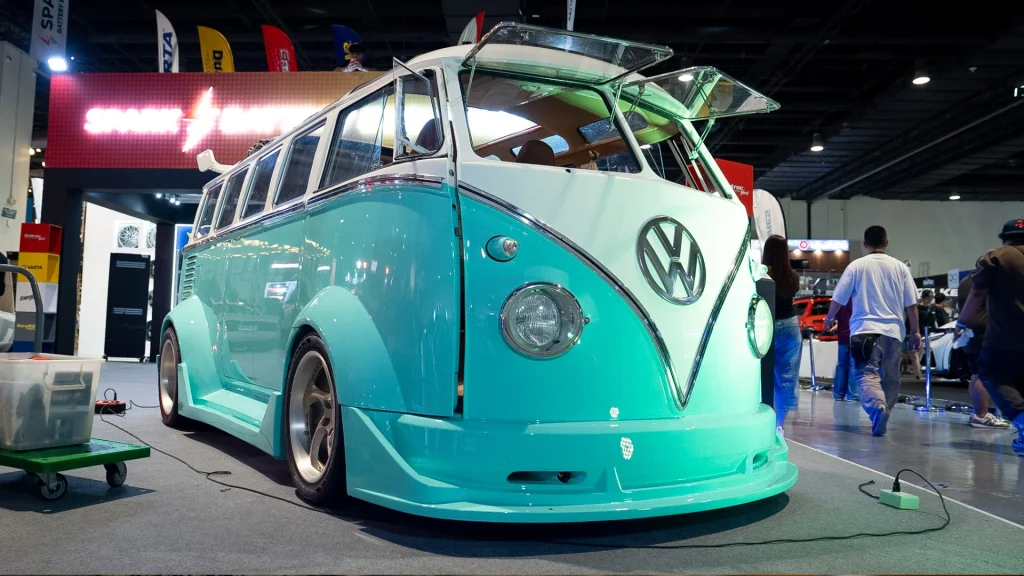
The result illustrates the level of fabrication involved in ambitious custom work. Major changes to the engine, body and doors require more than choosing parts from a catalog. They involve packaging different components into a vehicle never designed to accept them. No independently verified performance figures or road-test results accompanied the debut, so its visual and mechanical details are more useful than claims about how fast it might be.
Alex Lim, known as BanaweBoy, took a completely different route. His Pizza Planet pickup started as a 2015 Toyota Hilux previously used as a PLDT fleet vehicle. He shortened the chassis by approximately two feet, lowered the truck and fitted Rays wheels, Recaro seats and other custom interior components.
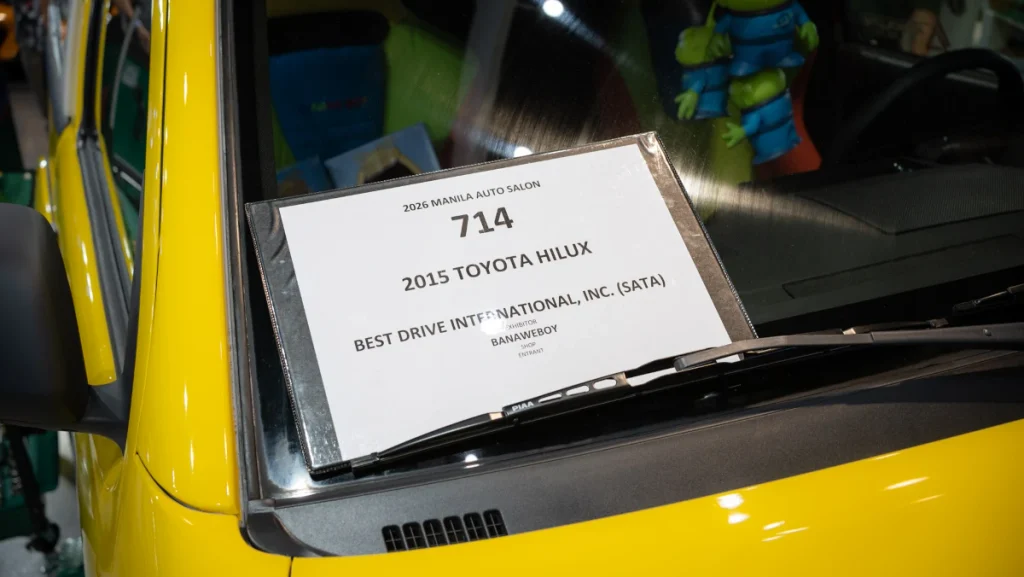
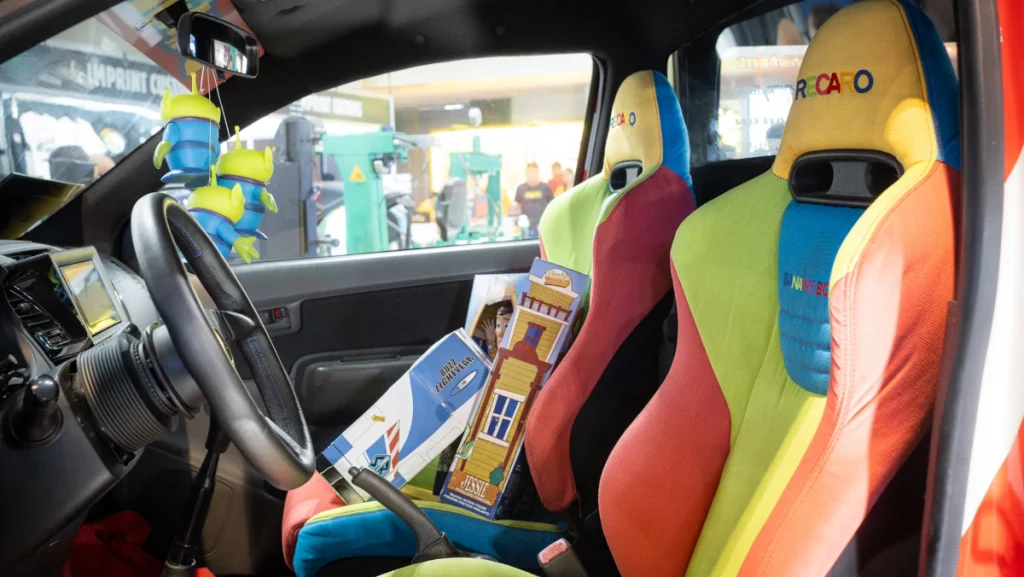
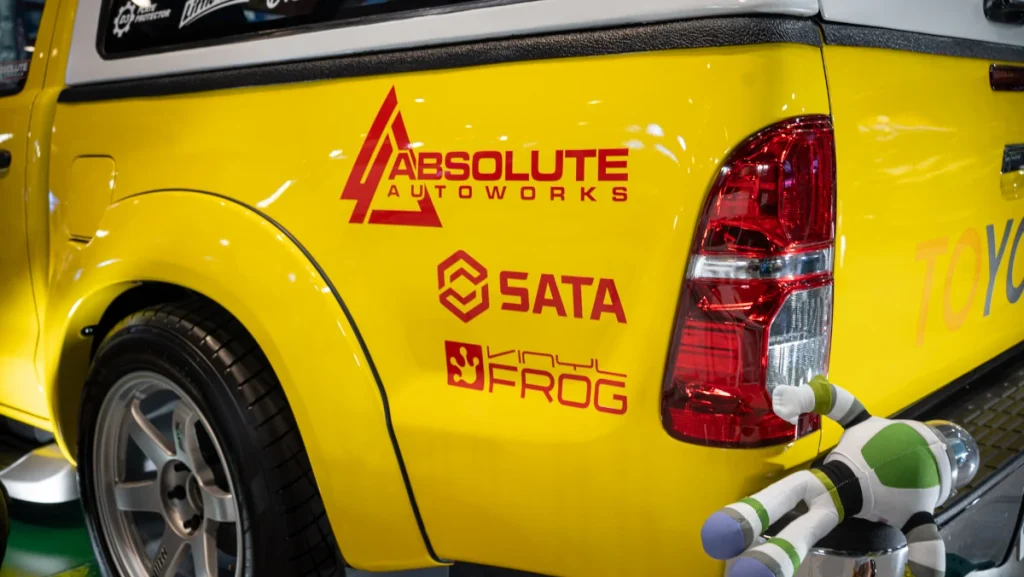
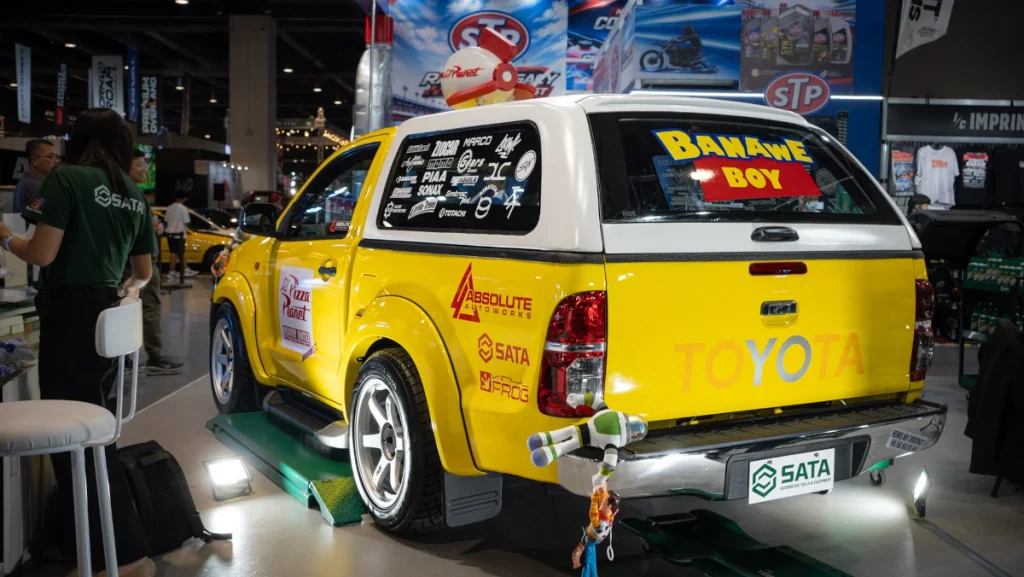
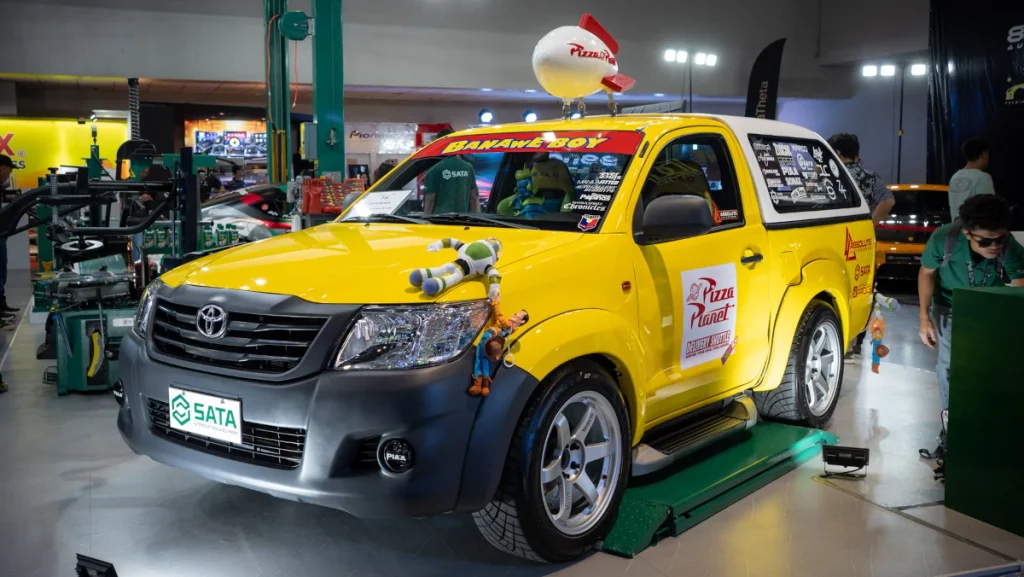
The inspiration is instantly recognizable to anyone familiar with Toy Story. But the interesting part is the work beneath the playful appearance. Cutting down a pickup’s chassis is a substantial modification. Lim used an ordinary former fleet vehicle as the foundation for a distinctive one-off project, demonstrating that a memorable build does not need to begin with an exotic or expensive base vehicle.

Taken together, the Kombiroo and the Hilux show two sides of Philippine customization. One emphasizes mechanical engineering and the careful assembly of unusual components. The other turns a practical workhorse into a personal creative project. Neither is a template for what an everyday owner should copy without considering safety, legality and workmanship.
A Plug-In Hybrid Navara Added a Different Kind of Adventure Build
A Nissan Navara Pro plug-in hybrid customized by Overland Kings offered another direction at Manila Auto Salon. Rather than concentrating on an engine swap or dramatic body changes, the build focused on equipment for outdoor use.
The pickup carried a rooftop tent, auxiliary PIAA lighting, all-terrain tires, a roll bar and a ladder. Its bed also retained the Navara Pro’s vehicle-to-load outlets, which can provide electricity to compatible devices when the vehicle is used away from conventional power sources.
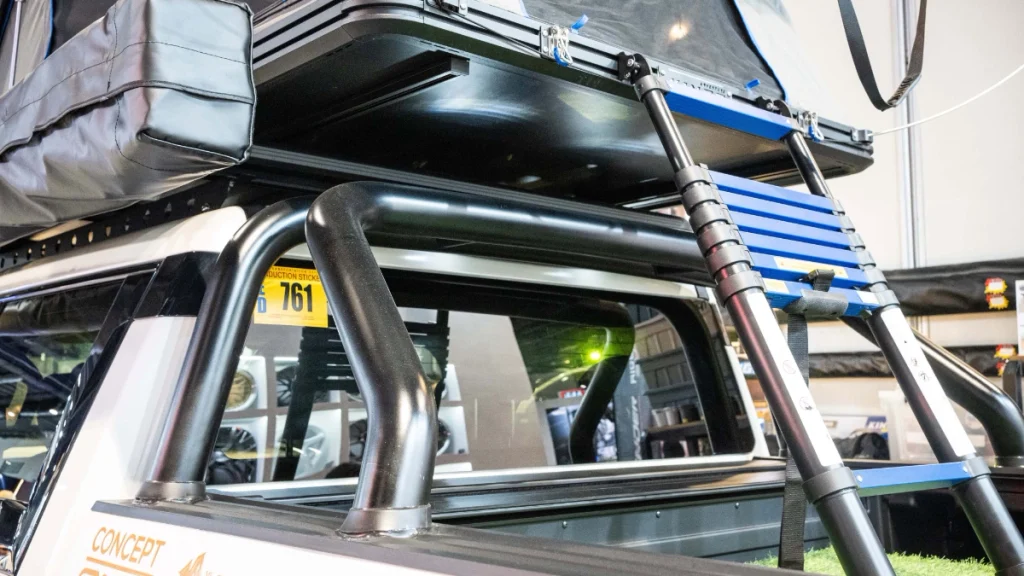
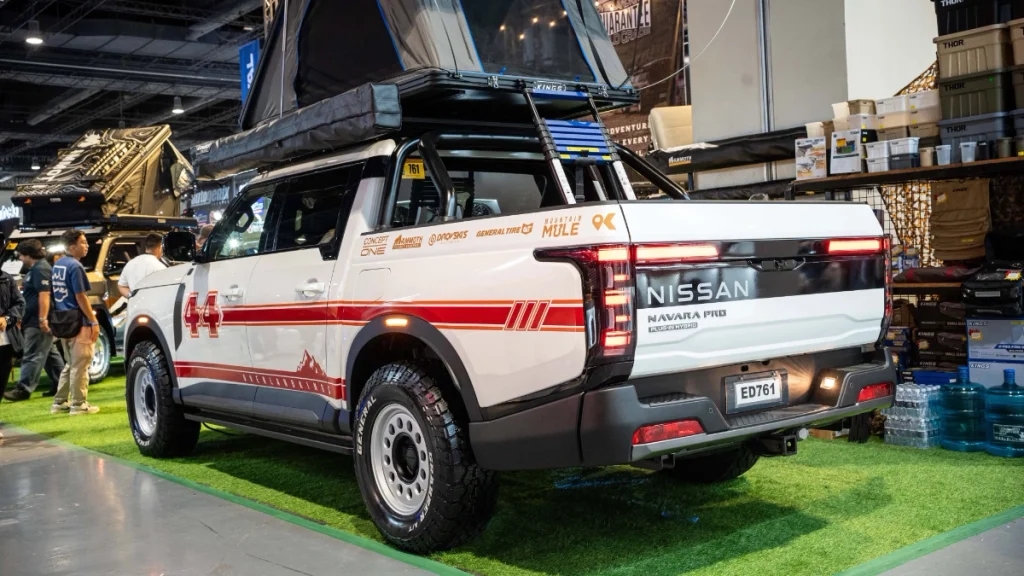
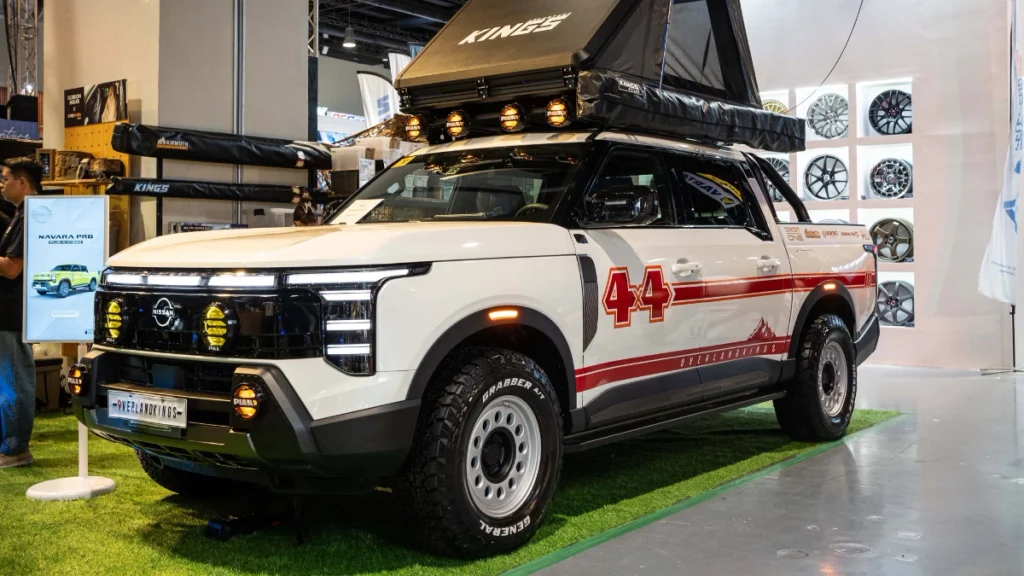
That makes the truck relevant beyond its appearance. Campers increasingly need power for lights, small appliances and electronics. A plug-in hybrid pickup with an onboard electricity supply offers a different starting point from a conventional diesel truck, although the usefulness of that feature depends on power limits, battery management and actual equipment requirements.

The display does not establish that electrified overlanding has become a major Philippine trend. It does show that a local outfitter is already treating a plug-in hybrid as a platform for accessories normally associated with traditional off-road pickups. There were no independently verified off-road test results or complete build costs to support a stronger judgment.
An Oil Verification Demonstration Had a Practical Use for Motorists
Not everything of interest was a custom vehicle. BSB Junrose, the Philippine distribution partner of LIQUI MOLY, demonstrated the lubricant company’s upgraded digital authentication system during the event.
Supported oil canisters carry an individual green-framed QR code that customers can scan using a smartphone. LIQUI MOLY says the system provides real-time feedback on product authenticity. If the result raises questions, the brand’s authentication app can perform an additional check and help customers report a suspected counterfeit product.

The timing matters. LIQUI MOLY had started introducing the upgraded system in May 2026, before the November motor show. Manila Auto Salon served as a local demonstration and consumer-awareness opportunity, not the technology’s first launch.
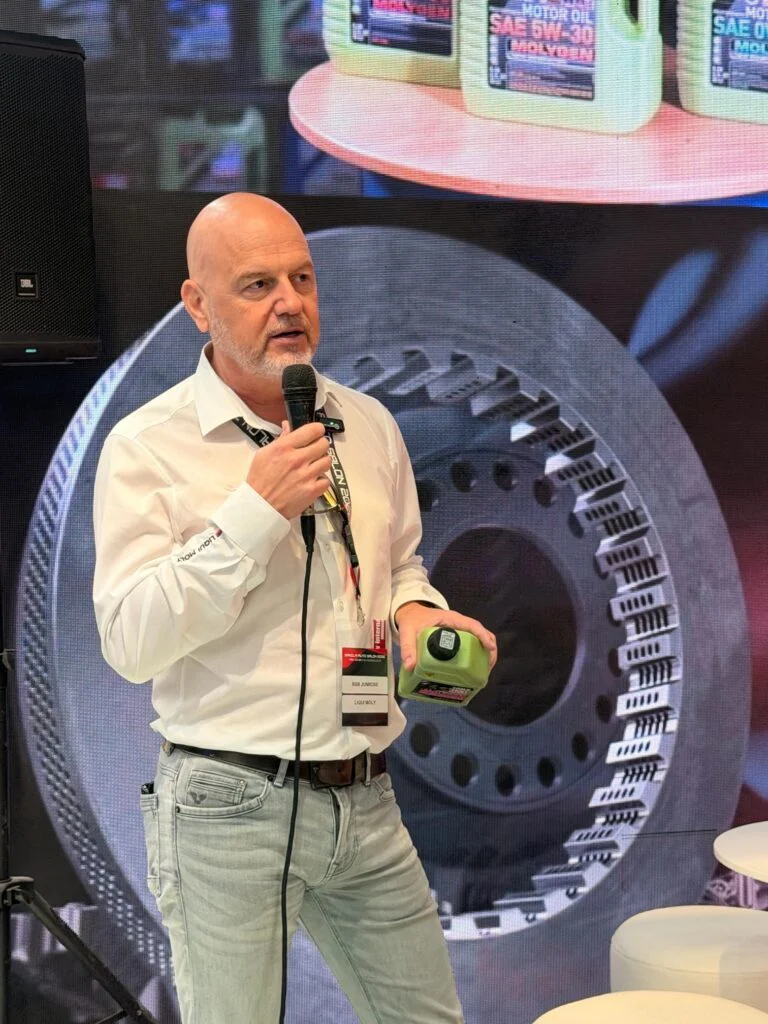
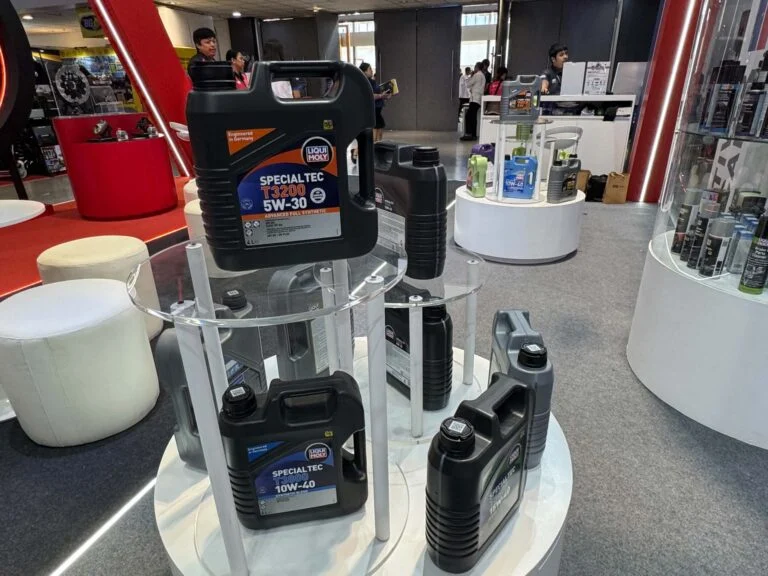
For vehicle owners, the benefit is straightforward. Counterfeit or incorrectly specified engine oil can expose an engine to unnecessary wear. Digital authentication adds a useful check, but it does not replace buying from reputable sellers or following the viscosity and performance standards stated in a vehicle’s manual. BSB Junrose also uses a separate Quality System sticker to identify products distributed through its own network.
The authentication display connects a show normally associated with styling and modifications to a common ownership concern: whether the parts and fluids being purchased are genuine.
Repair Suppliers Looked Beyond Cars to the Motorcycle Market
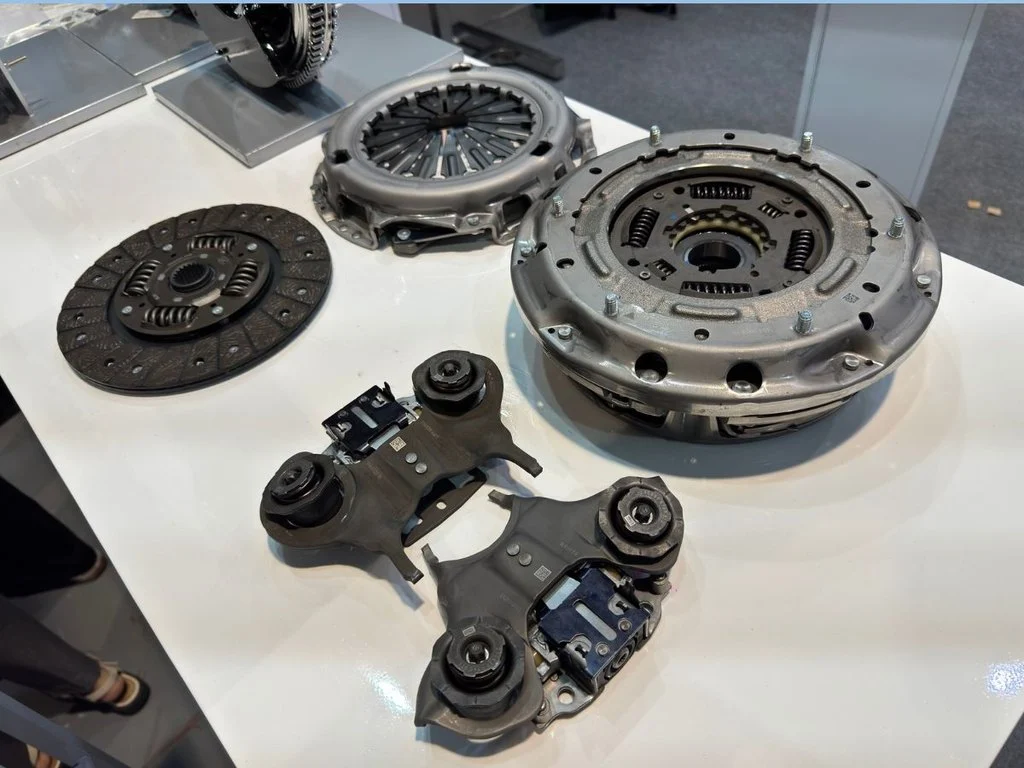
Schaeffler also used the 2026 show to present its Vehicle Lifetime Solutions portfolio, covering passenger cars, commercial vehicles, agricultural equipment and motorcycles. The company placed greater emphasis on two-wheelers, while discussing repair products, technical expertise and training for distributors and workshops.
This matters to businesses that work on vehicles long after the initial sale. Mechanics need access to suitable parts, but they also need reliable repair information and training as vehicle systems change. For an independent shop, dependable sourcing and support can be more useful than a display of expensive accessories.
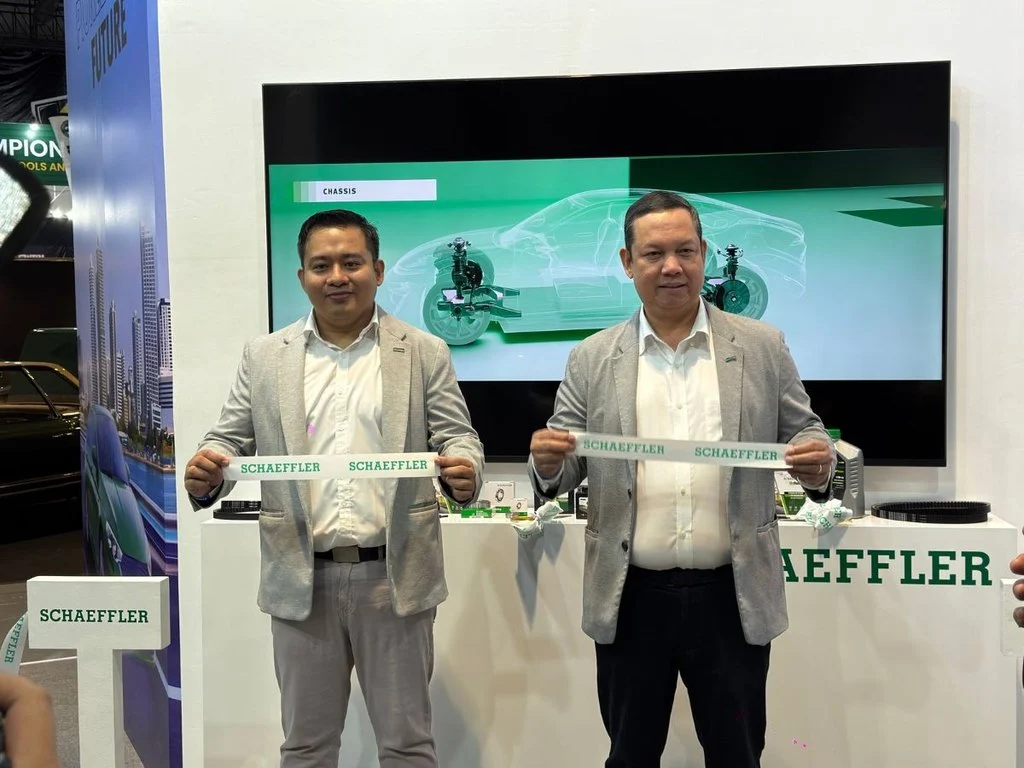
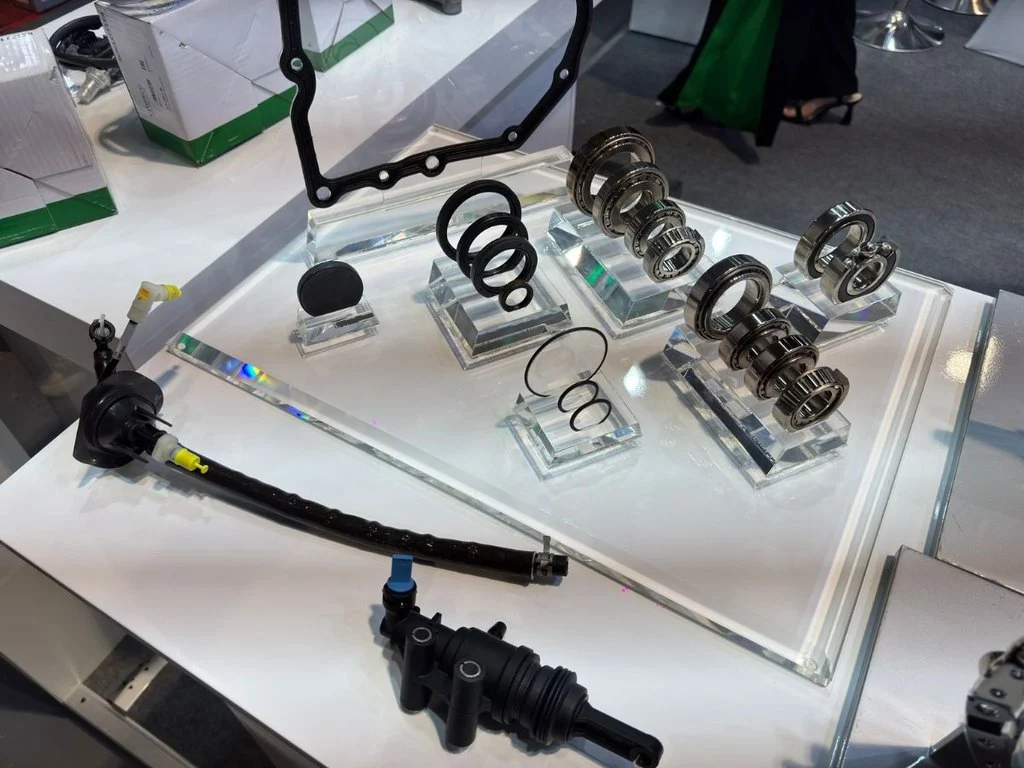
Schaeffler also outlined a gradual change in how its aftermarket products will be branded. The Schaeffler name is set to become more prominent, while familiar product names including LuK, INA and FAG remain visible. The phased change is scheduled to begin with FAG in the second quarter of 2027.

The company’s wider presentation did not establish how quickly new motorcycle products would reach every local repair shop. Availability, pricing and actual training access will determine the practical benefit for mechanics and owners.
Manila Auto Salon 2026 did not reinvent the custom-car show. Its familiar mix of builds and aftermarket booths still defined the event. But the Kombiroo, Pizza Planet Hilux and outfitted hybrid Navara gave it new projects to discuss, while the lubricant verification and repair-supply displays connected the exhibition to everyday vehicle ownership. Those concrete developments offer a more useful account of the show than a general claim that the event changed the automotive industry.
Track the models, market moves, and regulatory forces driving the Philippine automotive landscape in the Automotive section of Hemos PH.